
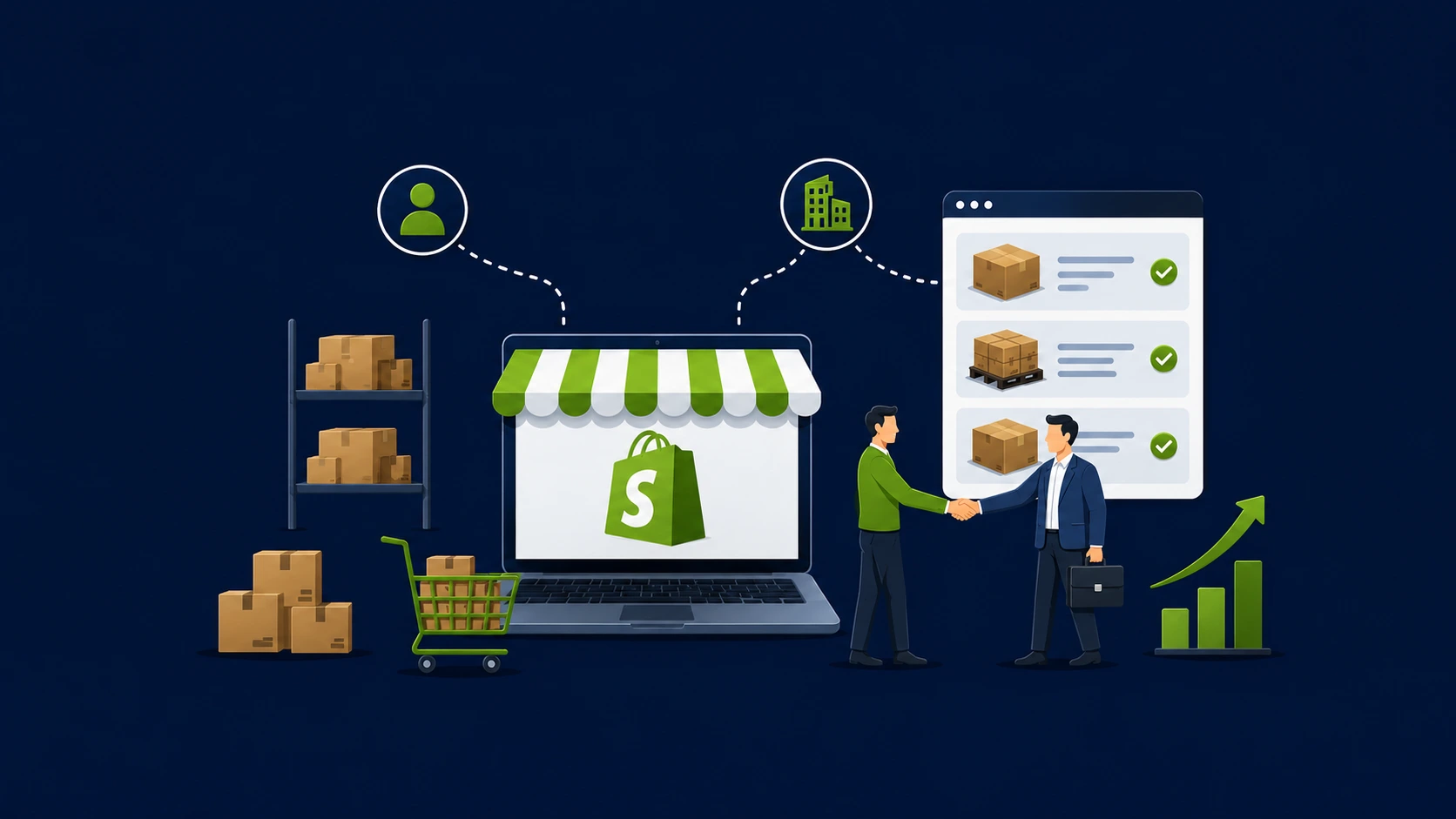
Wholesale is a different animal than retail, and honestly, most store owners figure that out the hard way. Buyers want custom pricing, bulk order forms, tax exemptions, and catalogs tied to their specific account, not a one-size-fits-all shopping cart. If your team is still juggling wholesale orders through spreadsheets, endless phone calls, or a storefront that was never built for B2B in the first place, you’re quietly losing money every month.
That’s where a shopify b2b ecommerce development agency earns its keep. Shopify, and Shopify Plus in particular, isn’t the scrappy startup platform it was five or six years ago. It’s grown into something wholesale brands can genuinely rely on. Set it up right, and it’ll handle tiered pricing, custom quoting, and everything in between, without dragging your buyers through a checkout built for someone buying a t-shirt.
We’ll get into what B2B ecommerce actually looks like on Shopify, which features you shouldn’t skip, and how to plan a rollout that works whether you’re starting fresh or migrating an existing wholesale operation.
Why Wholesale Brands Are Moving to Shopify
Not too long ago, B2B platforms meant heavy, expensive software and implementation timelines measured in months, not weeks. Shopify flipped that on its head. It’s become one of the go-to choices for a b2b ecommerce platform USA brands trust, and it’s not hard to see why. You get retail-grade UX paired with real wholesale functionality, which is a combination that used to feel impossible.
Here’s why brands keep landing on Shopify for wholesale:
- Native B2B tools are baked directly into Shopify Plus, so you’re not stitching together workarounds
- Page speeds stay fast and themes stay mobile-friendly, which matters more than people think
- The app ecosystem is genuinely massive, covering quoting, freight, inventory sync, you name it
- Payment and tax tools scale cleanly, whether you’re serving one region or a dozen
Buyers expect the same self-serve ease they get from consumer sites, full stop. That’s honestly the whole point of custom b2b storefront development on Shopify: you can give buyers that convenience while still keeping margins protected through private pricing and approval flows behind the scenes.
Core Features Every B2B Shopify Store Needs
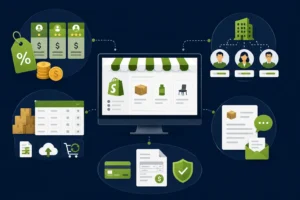
Before you jump into development, it’s worth knowing what actually separates a wholesale storefront from a standard one. These are the building blocks we’d prioritize, in roughly this order.
1. Custom Pricing and Tiered Discounts
Wholesale buyers almost never pay the same price, and they shouldn’t have to. A store built for this should support:
- Volume-based discounts that kick in automatically at checkout
- Customer-specific price lists tied to individual accounts
- Minimum order quantities set per product or per collection
This is where shopify b2b pricing tiers really do the heavy lifting. Instead of quoting every buyer by hand (which nobody has time for), you can group customers into tiers like distributor, retailer, or VIP account, then assign pricing rules that update instantly across the whole catalog.
2. Company Accounts and Buyer Roles
B2B buying almost never involves just one decision-maker, so plan for that from day one. Shopify Plus supports company profiles with multiple locations and multiple buyers, each carrying their own permissions. In practice, this means a purchasing manager can place the order while a finance contact handles the payment approval, all under one company account.
3. Bulk Ordering Tools
Nobody wants to add fifty SKUs to a cart one click at a time, and yet we still see stores set up this way. A proper wholesale shopify store setup should include:
- Quick-order grids where buyers just type in quantities by SKU
- CSV or spreadsheet upload for those larger repeat orders
- Saved carts and reorder shortcuts for your regulars
4. Flexible Payment and Tax Handling
Net terms like Net 30 or Net 60 are just how wholesale works, so a modern Shopify build needs to support purchase orders, invoicing, and automatic tax exemption for accounts that qualify. Get this piece right early, because fixing it after launch usually means a lot of manual back-and-forth you could’ve avoided.
5. Custom Quote Requests
Not every product deserves a visible price tag, especially custom or high-volume orders. A simple “Request a Quote” flow lets buyers submit what they need and get a tailored offer back, which keeps sensitive pricing private while you still capture the lead.
From pricing tiers to bulk order grids, we can build the exact B2B features your wholesale store needs.
Get a Custom QuoteShopify Plus vs Standard Shopify for B2B
One question we hear early and often is whether a brand actually needs Shopify Plus. Honestly, the answer just depends on scale and how complex your buyer setup is.
Standard Shopify can work fine for smaller wholesale operations, leaning on apps to simulate B2B functionality like tiered pricing or hiding prices until login. It’s more affordable, sure, but you’re trading that for app dependency and a few workflow limitations you’ll eventually bump into.
Shopify Plus, on the other hand, unlocks native shopify plus b2b features: company profiles, custom checkout extensibility, higher API limits, and real support for complex catalog structures. If you’re juggling multiple buyer types, high order volume, or international wholesale accounts, Plus tends to pay for itself over time.
Either way, you’ll get more out of working with an experienced shopify b2b ecommerce development agency that can actually map your buyer journey to the right mix of native features and apps, instead of over-building something you don’t need or under-delivering on what you do.
Planning Your B2B Storefront: A Step-by-Step Approach
- Map Your Buyer Segments Start simple: list out your distinct customer types. Are you selling to independent retailers, regional distributors, both? Each group probably needs its own pricing, minimum order rules, and maybe even its own catalog view.
- Audit Your Product Data Wholesale catalogs tend to be bigger and messier than retail ones, no way around it. Clean SKU data, accurate stock counts, and consistent categorization will save you a ton of time during development, and it cuts down on order errors once you’re live.
- Choose Your Platform Tier Weigh standard Shopify with apps against Shopify Plus based on how complex your buyers are, what your budget looks like, and where you expect to be in two or three years.
- Build the Core B2B Functionality This covers company accounts, pricing rules, bulk ordering, and payment terms. We approach this phase discovery-first at BinaryMetrix, mainly because every wholesale business has its own rules around minimums, exclusivity, and account hierarchies, and skipping that step tends to cause rework later. If you want a broader look at how we structure ecommerce projects in general, our ecommerce website development page covers the full process for both B2B and B2C builds.
- Integrate Backend Systems ERP, inventory management, accounting software, all of it needs to talk to your storefront. Weak integration here is one of the most common reasons B2B launches stall out.
- Test With Real Buyer Scenarios Before you launch, walk through actual buyer workflows, not just the admin side. Have someone place a real test order like a distributor would, request a quote, check out with net terms if that’s part of your setup.
- Launch and Monitor Once you’re live, keep an eye on order patterns, cart abandonment among logged-in accounts, and repeat purchase rates. B2B stores have a way of revealing their friction points only after actual buyers start clicking around.
Not sure where to start with company accounts, pricing rules, or backend integrations? Let's map it out together.
Book a Free ConsultationCommon Mistakes Wholesale Brands Make
Even with the right platform in place, execution is what actually matters. A few issues we run into again and again:
- Treating the B2B storefront like an afterthought bolted onto a retail theme
- Skipping proper buyer role setup, which always creates approval headaches down the line
- Underestimating just how much product data cleanup needs to happen before launch
- Picking apps that don’t talk to each other, leaving you stuck with manual reconciliation work
Avoiding most of this comes down to working with a team that’s actually shipped custom b2b storefront development projects before, not just built standard retail sites and called it a day.
Why Work With a Specialized Shopify B2B Agency
Sure, plenty of generic web agencies can spin up a Shopify store. But wholesale ecommerce runs on its own logic: pricing rules, account hierarchies, backend integrations that a retail-only build simply doesn’t need. A specialized shopify b2b ecommerce development agency brings pattern recognition from other wholesale projects to the table, and in our experience, that usually means fewer surprises mid-build and a smoother launch overall.
At BinaryMetrix, our Shopify team works across both retail and wholesale builds, so we know how to layer B2B functionality onto a store without wrecking the experience for any direct-to-consumer customers you might also serve. Our Shopify development page walks through our broader platform capabilities, including migrations and custom app integrations. And if your in-house team just needs extra hands for a specific build phase, you can hire a Shopify developer directly for focused sprints instead of a full engagement.
We’d also nudge brands to think past launch day. Future planning around wholesale marketplace integrations and B2B loyalty programs for repeat buyers can stretch the value of your storefront well beyond the initial build.
Keeping Your Store Running Smoothly After Launch
A wholesale storefront isn’t something you set up once and forget about. Order volume shifts, catalogs change, new buyer accounts get added, and all of it needs ongoing attention. Regular maintenance, security patching, and performance checks protect whatever you’ve invested in the build so far. If managing that in-house isn’t realistic for your team, it’s worth reviewing website maintenance packages that cover updates, monitoring, and support once your store is live.
Let's build a Shopify B2B storefront that matches exactly how your buyers order
Talk to Our Team






 +91-7982030802
  +1(315) 585-1155