

Most businesses start with a template. It makes sense affordable, quick, and gets you online fast. But somewhere along the way, things start feeling tight. The design does not reflect your brand anymore. A feature you actually need does not exist. Your developer says “the theme doesn’t support that.”
That is usually the moment people start seriously looking into custom WordPress website development for businesses and realizing how different it is from what they had before.
This guide is not going to oversell you. Instead, it walks through what custom WordPress website development actually means, when it genuinely makes sense, what it costs, and what separates a good WordPress website development company from one that wastes your money. Real talk, no fluff.
Why Growing Businesses Outgrow Template-Based Websites
There is nothing wrong with starting on a template. The problem is staying on one longer than you should.
Here is what that usually looks like in practice:
- The site gets slower over time: Commercial themes ship with dozens of features most businesses never touch. That dead weight accumulates. Page speed drops. Bounce rates climb.
- Brand identity stays generic: If a competitor can buy the same $79 theme, your website is not doing any differentiation work for you. You just look like everyone else.
- Customization hits a wall: Need a custom client portal? A booking system that matches your exact process? Templates were never designed for that. You end up stacking plugin on top of plugin until something inevitably breaks.
- Scaling becomes painful: Growing traffic, more product lines, new team members needing backend access, template sites start struggling under real operational weight.
- Security becomes a concern: Popular themes are studied by attackers. Their code is public. Their weaknesses are documented forums, GitHub threads, and hacker toolkits.
The website stops being a growth tool and starts being something your team works around. That shift when it happens is usually the sign it is time for something built properly.
Is WordPress a Reliable Platform for Business Websites?
Fair question, especially when platforms like Webflow, Shopify, and Squarespace are all competing for attention.
Here is the honest answer: for most businesses, WordPress is genuinely excellent. Not because of marketing because of what it has proven over two decades of real-world use.
- It handles serious scale: WordPress powers Reuters, Sony Music, TechCrunch, and thousands of enterprise operations. This is not beginner software wearing a business suit.
- The ecosystem is massive: Integrations, plugins, developer talent, community support. Nothing else comes close at this scale.
- You actually own your platform: Unlike SaaS website builders, WordPress is open source. No one can change the pricing model on you, shut down your plan, or lock your data behind an export wall.
- Extends into modern web tech: WordPress pairs well with progressive web applications for businesses that need app-like experiences without a native mobile build.
- SEO flexibility is unmatched: With proper development, WordPress gives you granular control over every technical SEO element that matters.
Where WordPress struggles: extremely lightweight marketing pages with no content management needs, or highly specialized SaaS tools with complex application logic better suited to a custom framework. But for business websites service companies, eCommerce, B2B platforms, portals. It holds up exceptionally well.
Why Choose Custom WordPress Development for Business Websites?
Here is what actually changes when you move from a template to a proper custom build.
Custom WordPress development services are not about making something prettier. They are about making something that works specifically for how your business operates.
- Everything is built for your workflow: Not adapted, not approximated. Actually built. If your sales process has three stages and requires a specific intake form tied to your CRM, that gets built exactly that way.
- UX is designed around your customer: A template forces your customer journey to fit its layout. A custom site reverses that completely. The layout follows how your customers actually think and move.
- The code is clean: No bloat from unused theme features. No six-plugin stack doing what one custom function could handle. Just purposeful, maintainable code.
- Technical SEO is built in from day one: Schema, crawl structure, heading hierarchy, canonical logic, handled during development, not patched in afterward with an SEO plugin.
- Integrations actually work properly: CRMs, payment gateways, ERPs, marketing automation tools connected cleanly via API, not held together with third-party plugins that break on every update.
- Security is not an afterthought: No publicly documented codebase for attackers to reference. Server-level configurations. Role-based access. Built the right way from the start.
Core Development Components of a Custom WordPress Website
When BinaryMetrix scopes a custom WordPress project, here is what actually gets built:
- Custom theme architecture: Written from scratch or built on a minimal starter, with zero page-builder dependency and complete control over every layout element.
- Custom plugin development: Business logic that does not exist in any plugin marketplace gets built as its own module — clean, upgrade-safe, and maintainable.
- Database structure and optimization: Custom post types, taxonomies, and query optimization designed around your specific data, not squeezed into WordPress defaults.
- API and third-party integrations: REST API connections, webhooks, and middleware logic to connect your site with the tools your team actually uses daily.
- Performance stack: Server-side caching, CDN setup, image compression pipelines, deferred scripts, all configured to score well on Core Web Vitals, not just look fast locally.
- Security configuration: Brute force protection, activity logging, two-factor authentication, and firewall rules treated as standard, not optional add-ons.
The Development Process: From Strategy to Launch
At BinaryMetrix, projects do not start with code. They start with questions.
1. Discovery and Requirement Analysis
What does your business actually need? Who are your users? What does your current tech stack look like? What has failed before? This phase ends with a clear scope document not a vague estimate.
2. Wireframing and UX/UI Design
Before development begins, every key page is wireframed and the user journey is mapped. Design mockups are reviewed and signed off before a line of code is written. This step alone prevents the most common cause of project overruns.
3. Frontend and Backend Development
Frontend brings approved designs to life responsive, accessible, performance-optimized. Backend handles data structures, integrations, custom functionality, and WordPress configuration.
4. Testing and Quality Assurance
Performance benchmarks, cross-browser checks, mobile testing, security audits, and functional testing across every feature and device. Nothing goes live that has not been properly stress-tested.
5. Deployment and Post-Launch Support
Staged deployment keeps the transition clean. After launch, BinaryMetrix monitors performance, handles updates, and stays available because the work does not really end at go-live.
What Is the Cost of Custom WordPress Development?
This is where most agencies get vague. We will be direct.
What drives the cost up or down:
- How complex the features and functionality are
- Number of third-party integrations required
- Whether design is adapted or built fully custom
- Volume of content being migrated
- Timeline expectations
- Scope of post-launch support
How agencies typically price projects:
- Fixed price — Defined scope, agreed total. Works best when requirements are clear upfront.
- Hourly rate — Flexible scope, billed as work happens. Better for evolving or exploratory projects.
- Monthly retainer — Ongoing development or maintenance partnership. Suits businesses with continuous needs.
Realistic price ranges globally:
| Project Type | Estimated Investment |
| Basic Custom Website | $600 – $1,000 |
| Mid-Level Business Website | $1,000 – $2,500 |
| Enterprise-Grade Platform | $3,000 – $10,000+ |
Do not forget ongoing costs:
- Hosting: $50 – $150/year based on traffic and server needs
- Plugin licenses: $100 – $200/year
- Maintenance: varies based on the type of website
- Security monitoring: varies based on the type of website
Not sure what your project would actually cost?
BinaryMetrix offers a free, no-pressure consultation, clear scope, honest timeline, and transparent pricing. No vague ballpark figures. Book Your Free Consultation →
Investment vs ROI: Is Custom WordPress Worth It?
The upfront number looks bigger. The long-term math usually tells a different story.
- Conversion rates improve: Websites designed around specific customer journeys consistently generate more leads and completions than template sites adapting a generic layout.
- Rebuild cycles disappear: A well-built custom site does not need to be replaced every two to three years. It gets extended. That saves significant money over time.
- Organic traffic compounds: Clean architecture and fast load times are permanent SEO advantages. The traffic gains accumulate year over year.
- Fewer emergency fixes: Reduced plugin dependency means fewer update conflicts, fewer security incidents, and fewer 2am “the site is down” situations.
Best Practices for Custom WordPress Website Development
Good development is half the work. These practices are what separate a site that keeps performing from one that slowly deteriorates.
- Mobile-first always: Over 60% of web traffic is mobile. If you are designing a desktop first, you are already behind.
- Modular, documented code: Any competent developer should be able to pick up the codebase and understand it. Code written only for the person who wrote it is a liability.
- Performance baked in: Full-page caching, CDN delivery, next-gen image formats, and deferred JavaScript loading should be standard not afterthoughts.
- SEO architecture from day one: URL structures, canonical tags, schema markup, XML sitemaps, built into the development process, not added with a plugin at the end.
- Security as a standard: Regular core updates, least-privilege user roles, two-factor authentication, server-level firewall rules. Non-negotiable.
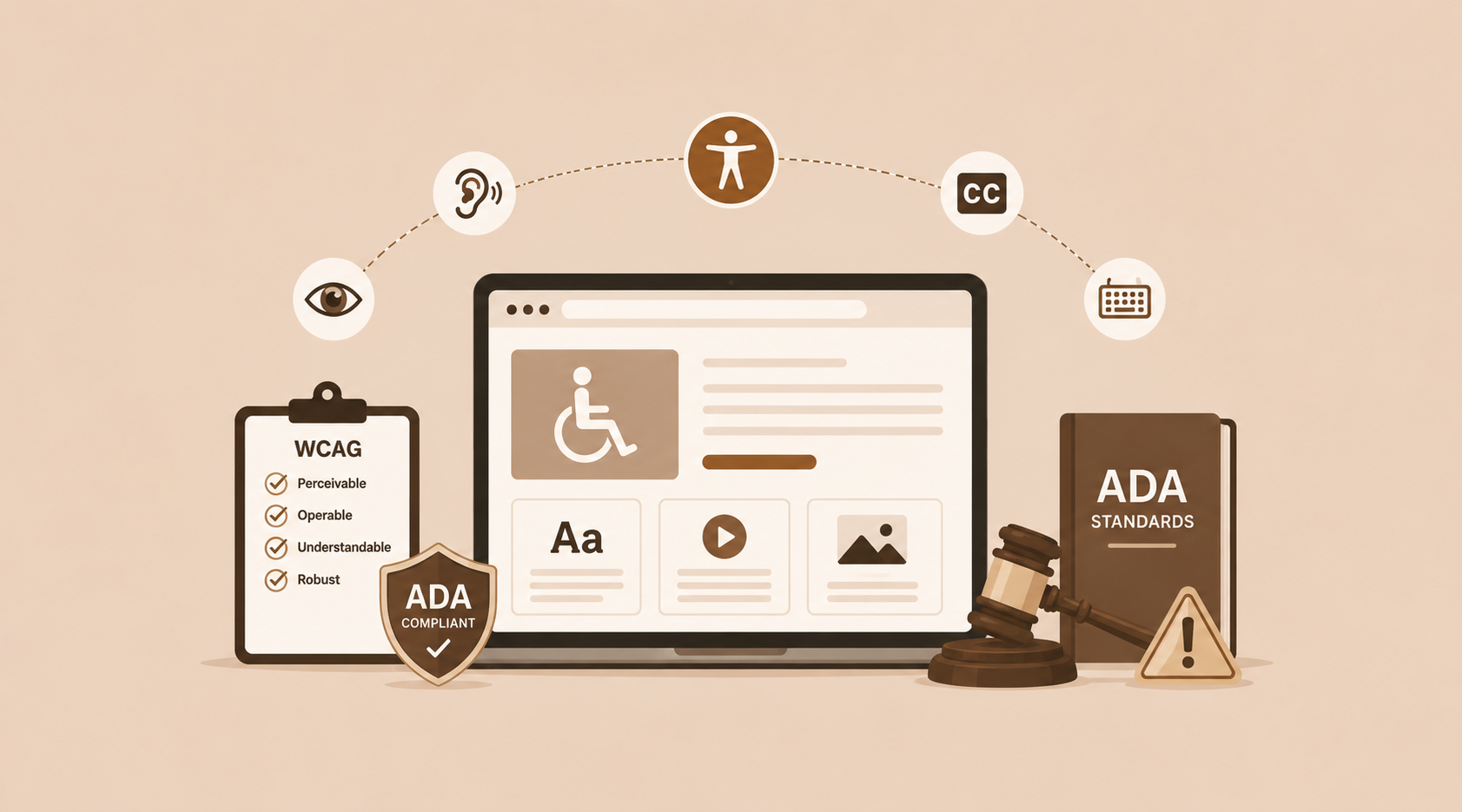
- Accessibility: WCAG compliance is increasingly a legal requirement in many markets and always better UX for everyone.
How to Choose the Right WordPress Website Development Company
The agency you pick matters more than almost any other decision in this process.
What to actually evaluate:
- Portfolio depth: Not just how things look, but what problems they solved. Ask about outcomes- traffic, conversions, load times, not just screenshots.
- Technical transparency: Can they clearly explain their stack, testing process, and how they handle post-launch issues? If the answers are vague, that is your answer.
- Documented process: A serious wordpress website development company has a repeatable, documented workflow. “We figure it out as we go” is not a process.
- Post-launch commitment: What exactly happens after the site goes live? SLA? Dedicated support? Clear escalation path?
- Communication style: Are they responsive during the sales process? Because that is the best version of how they communicate. It only gets worse under project pressure.
Red flags worth walking away from:
- No discovery or planning phase before quoting
- Cannot show real portfolio work or documented results
- Pricing is suspiciously low (corners get cut somewhere)
- No defined post-launch support offering
- Contracts with vague or missing deliverable definitions
BinaryMetrix works with businesses across professional services, eCommerce, SaaS, and enterprise sectors delivering wordpress development for enterprises and growing businesses built around performance, not just aesthetics.
Custom Development vs Templates: Final Decision Guide
| Factor | Template Website | Custom WordPress Website |
| Flexibility | Limited to theme options | Fully flexible |
| Cost | Low ($500 – $2,000) | Higher ($3,000 – $10,000+) |
| Scalability | Limited | High |
| Performance | Variable | Consistently optimized |
| Brand differentiation | Low | High |
| Long-term cost | Higher due to rebuilds | Lower built to last |
| Best for | Startups, MVPs, tight budgets | Growth-stage businesses, enterprises |
Go with a template if you are validating an idea, running a short campaign, or working with template-based platforms like Shopify that already fit your business model well.
Go custom if you are scaling, need specific functionality, and want a digital asset that earns its keep over years not something you rebuild every 18 months.
Conclusion: Is Custom WordPress Right for Your Business?
Honest answer; not always. And any agency that tells you custom is always the right move is trying to sell you something.
If you are in an early stage, testing an idea, or working with a tight budget, start with a template. There is no shame in that.
But if your business is growing, your current site is holding you back, or you need functionality that templates genuinely cannot deliver – custom WordPress website development for businesses stops being a luxury and starts being the practical choice.
The deciding factors are straightforward: what your business actually needs, where it is headed, and whether your website should be an asset or a workaround.
BinaryMetrix builds custom WordPress development services for businesses that want to stop working around their website and start using it as a genuine growth tool. If that is where you are, let us talk.






 +91-7982030802
  +1(315) 585-1155