
We’ve had this same conversation with a handful of restaurant owners and startup founders over the past year, and it usually starts the same way. Someone wants food delivery app development like DoorDash, they’ve done some Googling, and now they’re staring at ten different quotes that don’t seem to agree on anything. Honestly, that’s fair. The range in this space is huge, and most of the generic articles out there don’t explain why.
So here’s my attempt at an honest one. If you’re looking into food delivery app development like DoorDash for your own business, this covers what it actually costs, which features matter versus which ones are just nice to have, and how these platforms make their money once they’re live.
Why the Food Delivery App Market Still Has Room to Grow
A lot of people assume the food delivery space is basically closed off now that DoorDash, Uber Eats, and Grubhub own most of the headlines. I get why people think that. But it’s not really true, and I’d argue it’s one of the biggest misconceptions founders have when they start looking into food delivery app development like DoorDash.
Regional players keep launching. Campus apps, single-city platforms, cuisine-specific delivery services, they’re all finding an audience because national platforms can’t replicate the local restaurant relationships that a smaller, focused app can build. And restaurants themselves are getting tired of handing over 20 to 30 percent of every order in commission. A lot of them are actively looking for an alternative. That gap is where new entrants keep finding room.
What Actually Goes Into a DoorDash-Style App
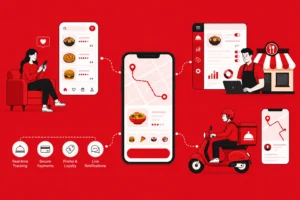
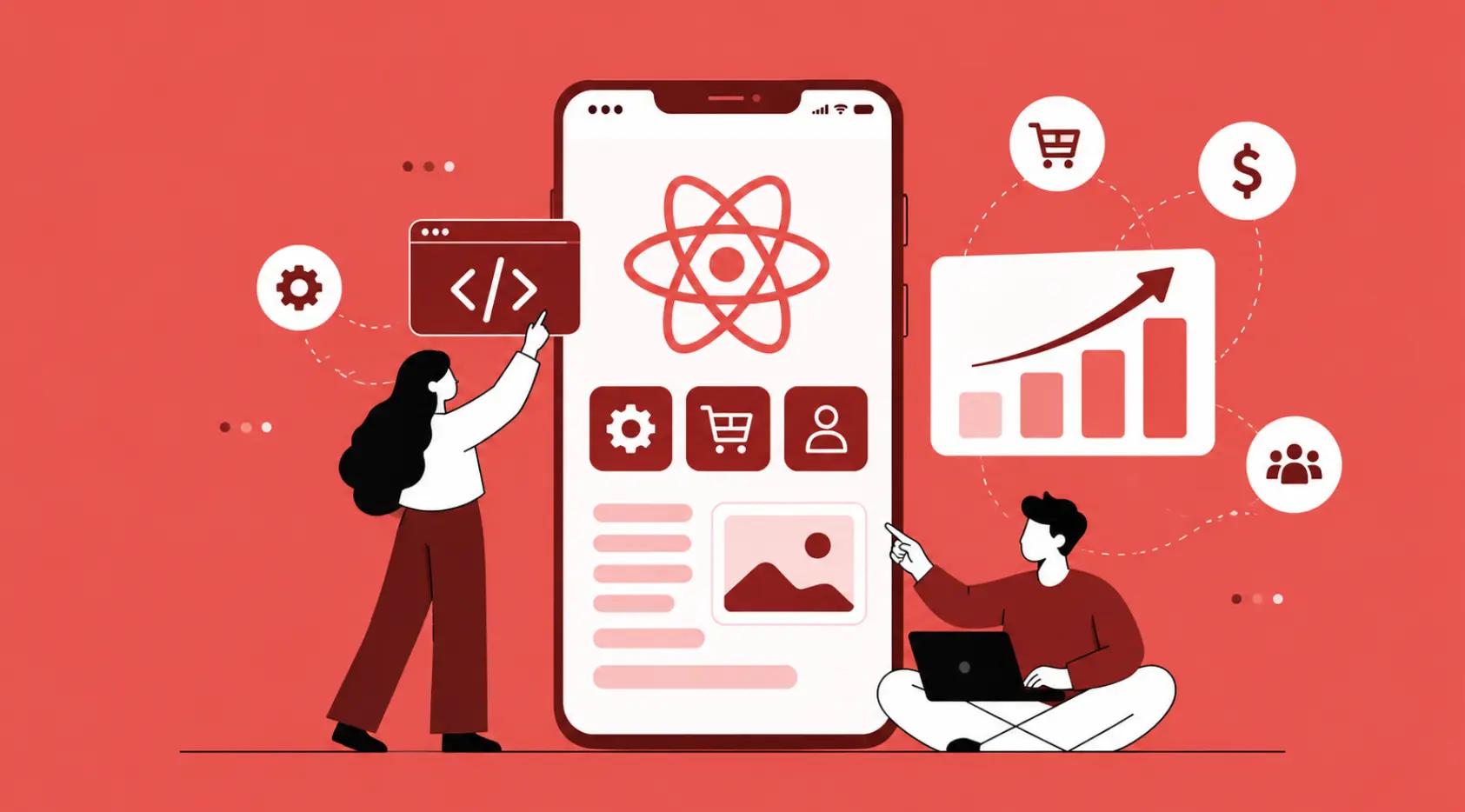
Here’s something a lot of first-time founders don’t realize going in: a food delivery platform isn’t one app. It’s three apps that all have to talk to each other in real time. Skip one of them, or half-build one of them, and the whole thing falls apart pretty fast.
The Customer App
This is the part everyone thinks about first when they picture food delivery app development like DoorDash, since it’s the piece users actually interact with.
- Restaurant discovery with filters for cuisine, rating, price, and delivery time
- Menu browsing with photos, customization, and live price updates as items are added
- Checkout supporting cards, wallets, Apple Pay, Google Pay
- Live order tracking with the driver’s location on a map
- Reordering from order history in a couple of taps
- Ratings and reviews, both for the restaurant and the delivery itself
- Push notifications at every stage: confirmed, prepping, driver assigned, arriving
- Promo codes and some kind of loyalty structure to bring people back
The Restaurant Dashboard
Restaurants need to manage this without calling support every time something changes. That’s not optional, it’s the difference between them staying on the platform or leaving after two weeks.
- Menu management they can update themselves, instantly
- An order queue with accept, reject, and prep-time controls
- Basic sales analytics: daily revenue, best sellers, peak hours
- Low-stock alerts for menu items
- Payout tracking so they’re not guessing when money lands
The Driver App
- Smart job assignment that matches drivers to nearby orders
- Turn-by-turn navigation
- An earnings dashboard, per-trip and weekly
- In-app chat or calling for delivery instructions
- Batch delivery support, so a driver can grab two or three orders on one route when the timing works
If you’re building toward a broader on-demand model, not just food, it’s worth looking at how similar apps handle live GPS matching and dispatch. Our piece on taxi app development like Uber gets into a lot of the same dispatch logic that a food delivery driver app leans on, since both are solving the same real-time location problem underneath.
Every delivery app looks different once you scope it to your budget. Let's map out the right feature set for you.
Talk to Our TeamWhat Does This Actually Cost?
This is the question everyone actually wants answered, so I’ll try not to dance around it. Cost depends on scope, platform choices, and how custom the design work is, but here’s a realistic range based on what I’ve seen play out.
Three Cost Tiers to Think About
- MVP: One platform, the three core apps built on a lean feature set. Usually a few weeks to a couple of months. This is where most people should actually start, even if it feels underwhelming compared to what DoorDash has today.
- Mid-range build: Adds loyalty programs, better analytics, multiple payment gateways, and a more polished UI. Naturally, this stretches both budget and timeline.
- Enterprise-grade platform: AI-driven restaurant recommendations, dynamic pricing, advanced routing, multi-region scalability. The biggest lift by far. Most founders don’t need this on day one, and honestly, most shouldn’t try to build it on day one either.
What Swings the Number
- Native iOS and Android builds versus one cross-platform codebase
- How many third-party integrations you need (payments, OTP, mapping)
- How complex the admin panel and analytics side gets
- Multi-language or multi-currency support, if international expansion is on the table
- Custom UI work versus a templated design system
If you want a number that actually applies to your idea rather than an industry average, the honest move is getting a scoped estimate. You can reach out through BinaryMetrix’s contact page and walk through your requirements directly instead of guessing from a blog post.
Picking the Right Tech Stack
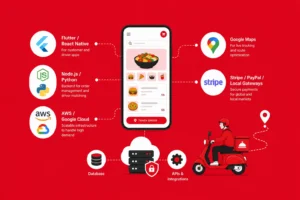
The technology underneath a food delivery app matters just as much as the feature list on top of it, because it decides how the platform behaves once real order volume hits.
Most modern builds lean on:
- Flutter or React Native for the customer and driver apps, since building native twice rarely makes sense for a first launch
- Node.js or Python on the backend, handling order flow and driver matching in real time
- AWS or Google Cloud for the infrastructure, especially to handle the Friday and Saturday dinner rush without falling over
- Google Maps or a similar API for live tracking and route optimization
- Stripe, PayPal, or region-specific gateways depending on where you’re launching
If your version leans more toward an AI-heavy experience, smart recommendations, predictive delivery windows, automated support, it’s worth reading our guide on AI app development first. That layer adds real complexity, and it’s better to know what you’re signing up for before it’s in the budget.
How Do Apps Like DoorDash Actually Make Money?
People assume it’s all commission. It’s not, and that’s actually one of the more interesting parts of studying food delivery app development like DoorDash closely, because the revenue is stacked across several sources, not just one.
- Restaurant commissions, usually 15 to 30 percent per order
- Delivery fees charged to customers, often scaled by distance and demand
- Service fees, a smaller percentage tacked on at checkout
- Subscription plans, similar to DashPass, offering free delivery for a flat monthly fee, which creates recurring revenue that doesn’t depend on any single order
- Advertising and promoted restaurant listings
- White-label or franchise licensing of the platform itself to other regions
Here’s my honest take, though. Copying DoorDash’s exact fee structure on day one is usually a mistake for a new platform. Most regional apps that actually succeed launch with lower commissions to win restaurant partners first, then layer in subscriptions and advertising once order volume justifies it. A restaurant commission comparison tool, letting owners model their margins under different plans before signing up, would be a smart feature to add down the line.
Commissions, subscriptions, and ads work differently by market. Let's find the mix that fits yours.
Discuss Your Revenue StrategyMistakes I See Founders Make Constantly
- Underestimating the driver app. Customers care about ordering, sure, but the whole system breaks if driver assignment is clunky or delivery windows are unreliable.
- Ignoring restaurant onboarding friction. If updating a menu feels like a chore, adoption slows down fast, and restaurants churn.
- Skipping load testing entirely. Order volume spikes hard at lunch and dinner, and an app that hasn’t been stress-tested will crash at the worst possible moment.
- Trying to launch with every feature DoorDash has today. That delays launch by months for no real benefit. Start lean, validate, expand later.
Custom Build or White-Label?
This is usually the first real fork in the road. White-label gets you to market faster and costs less upfront, but you’re limited on branding, customization, and how far you can scale before hitting a wall. Custom development costs more and takes longer, but you own the code outright and you’re not stuck waiting on someone else’s roadmap.
If you’re leaning custom, our team’s work across native, hybrid, and cross-platform mobile app development means we can walk through which approach actually fits your budget, rather than pushing the pricier option by default.
Final Thoughts
Food delivery app development like DoorDash is genuinely achievable for a well-funded startup, and honestly, even for a smaller regional business willing to compete on service instead of scale. The three-app system, customer, restaurant, driver, has to be built with real-time performance in mind from day one. And the commission-heavy model DoorDash runs isn’t the only way to build something profitable. Plenty of regional platforms have grown by undercutting the big players on fees and winning restaurant loyalty first.
If you’re serious about this, the next step is getting an honest, scoped cost estimate based on your actual feature list, not a generic industry number.
From MVP to full-scale platform, we handle it all as one connected build.
Start Your Project





 +91-7982030802
  +1(315) 585-1155