
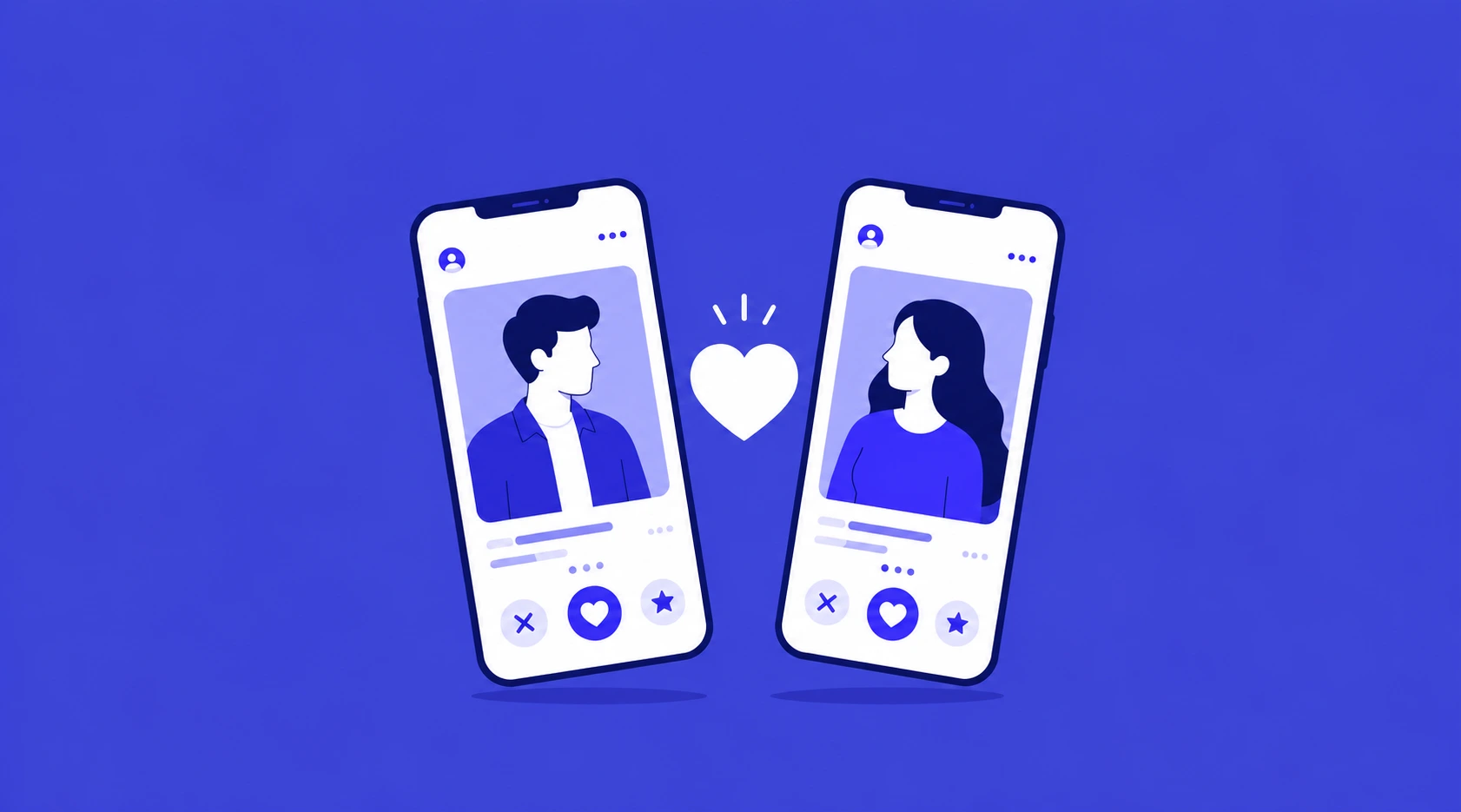
Let me be direct about something: most apps fail not because the idea was bad, but because the execution missed. And in no category is that more obvious than online dating. Tinder cracked a code that nobody else had figured out at scale, and since then, dating app development like Tinder has gone from a novelty conversation to a serious business discussion. If you are sitting on an idea in this space, you are not late. You just need to build it right.
We have helped founders across the US, Canada, and Europe turn exactly these kinds of ideas into real products. At BinaryMetrix, we are not just writing code. We are helping figure out what gets built first, why it gets built that way, and what a realistic path to launch actually looks like. This guide walks through all of it: the features, the process, the money.
Why Build a Dating App in Today’s Market?
People are not going to stop wanting to meet each other. That sounds obvious, but it is worth saying out loud because it is the foundation the entire market rests on. Dating apps are one of the few app categories where daily active usage stays genuinely high without aggressive push campaigns. Users open them out of habit, out of curiosity, sometimes out of boredom. That is an engagement pattern most app developers would trade a lot for.
Some specific reasons this market keeps drawing smart builders:
- Monetization through subscriptions and gated premium features holds up well when the core product earns user trust
- Once the matching loop starts working for a user, they stay. Churn drops fast after first meaningful connections
- There is genuine whitespace in the teen dating app category, faith-based matching, professional communities, and interest-specific niches
- White-label and clone frameworks let teams move faster without rebuilding basic infrastructure from scratch
None of this matters much without the right foundation. Finding a solid dating app development company before you go further is genuinely the most important early decision you will make.
Core Features of a Dating App Like Tinder
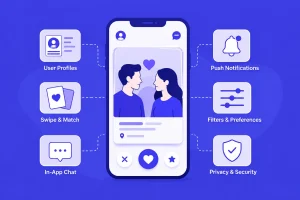
Ask most people what makes Tinder work and they will say the swipe. That is a surface-level answer. What actually makes the app sticky is a whole layer of features underneath that users barely notice until they are missing. Here is what needs to go into a dating app that people will actually keep using:
1. User Registration and Profile Setup
Nobody wants to answer twenty questions before they can see a single profile. Onboarding needs to move fast: social login or phone number, a few photos, a quick bio, some basic preferences. Done. What happens behind the scenes during that process matters too. Good profile validation catches fake accounts early, and that protects the integrity of the whole community before it even gets started.
2. Smart Matching Algorithm
If the profile is what users see, the algorithm is what they feel. Every worthwhile tinder app development project lives or dies on this. Tinder layers location, age range, and behavioral data together to surface profiles that feel relevant rather than random. A system that learns from how users actually swipe and engage will keep producing better matches over time. That improvement loop is what keeps people coming back instead of deleting the app after week two.
3. Swipe-Based Interface
There is more craft here than it looks. For any app like tinder development project, the swipe interaction has to feel right at a physical level. Too stiff and users feel like they are working. Too loose and decisions feel accidental. The animation timing, the snap-back behavior, the visual feedback when a match happens: all of it adds up to whether the app feels alive or feels like a demo. Small UX details at this layer carry a lot of weight.
4. Real-Time Chat and Messaging
A match that goes nowhere is a frustration, not a success. Once two people connect, the chat experience is where the real product either delivers or falls apart. Emoji, GIFs, read receipts, message delivery indicators: these are not extras, they are the signals users rely on to feel like a real conversation is happening. Lag in messaging kills the moment. Reliable, fast chat keeps it alive.
5. Geolocation and Location Filters
Distance matters in dating in a way that it does not in most other apps. A two-mile radius feels completely different from a twenty-mile radius to someone looking for a date this weekend versus someone open to long-distance. GPS-based filtering with user-controlled distance settings is foundational to good online dating app development. Just as important: users need to feel that their exact location is not being exposed without their consent. Privacy here is not just a feature, it is a trust signal.
6. Match Login and Notification System
A clean match login flow combined with smart notification timing can quietly double the re-engagement rate. The apps that get this wrong either bombard users until they turn off all notifications, or stay so quiet that people forget the app exists. The right approach gives users control, sends alerts that actually mean something, and makes coming back feel rewarding rather than obligatory.
7. Premium Features and In-App Purchases
Premium features work best when users genuinely want them, not just when they are blocked from something basic. The ones that convert well:
- Super Likes to stand out from the crowd
- Boost to increase profile visibility for a limited time
- Unlimited swipes for power users
- See who liked you without matching first
- Undo accidental left swipes
8. Safety and Reporting Tools
You cannot build trust in a dating app without visible safety infrastructure. Photo verification, in-app reporting, easy blocking, and enforced community standards are the minimum. Where this gets more complex is in the teen dating app category. Age verification, parental notification options, and active content moderation are not features you add later. They have to be part of the architecture from day one, legally and ethically.
Our mobile app experts build dating apps with everything users expect and more.
Get a Free QuoteThe Dating App Development Process
The dating app development process looks linear on a slide deck. In practice, it is iterative, and the teams that do it well treat every phase as something to be learned from rather than just completed. Here is how a well-run build actually unfolds:
Step 1: Discovery and Requirement Analysis
This phase gets skipped or rushed more than any other, and it is the one that causes the most expensive problems downstream. What are you building, exactly? Who uses it and why? Which platform do you launch on first? What does the first version actually include versus what goes on the roadmap? Getting sharp answers to these questions before design starts is what separates projects that ship on budget from ones that do not.
Step 2: UI/UX Design
Dating app design has a short attention span to win over. Users decide within seconds whether an app feels worth their time. The design phase covers wireframes, interaction flows, visual systems, and tested prototypes. It is not about making things pretty; it is about making decisions feel effortless and navigation feel obvious. Our UI/UX design services are grounded in that philosophy: design that gets out of the user’s way.
Step 3: Frontend and Backend Development
Frontend is everything the user touches directly: screen flows, swipe physics, chat interfaces, transitions. Backend is everything running underneath: authentication, the matching engine, data storage, messaging infrastructure, payment processing, push notification pipelines. Both sides have to be built to hold up under real traffic, not just demo conditions.
For founders watching the budget closely, Flutter and React Native are genuinely worth considering. A single shared codebase covering both iOS and Android is not a compromise anymore. The performance gap between cross-platform and native has closed significantly, and the cost savings are real.
Step 4: Platform-Specific Development
When native is the right call for your product and audience, platform expertise is non-negotiable. iOS apps built in Swift and Android apps built in Kotlin give you full access to platform-specific features and the smoothest possible user experience on each device. Some products genuinely need that. Others do not. Knowing the difference is part of what good development guidance looks like.
Step 5: Testing and Quality Assurance
Dating apps handle some of the most personal data users will ever share through an app: photos, messages, location, payment details. QA here goes beyond catching UI bugs. Security testing, load testing for peak usage scenarios, privacy compliance checks, and cross-device compatibility all have to be cleared before anything ships. Cutting this phase short is how you end up in a data breach headline.
Step 6: Deployment and Launch
App Store and Google Play submissions have real requirements, and first rejections are common for apps that have not navigated the review process before. This phase covers submission preparation, compliance review, store listing optimization, metadata setup, and early analytics configuration. Getting this done cleanly the first time saves days of back-and-forth.
Step 7: Post-Launch Support and Scaling
Real users expose things no QA process fully anticipates. How the infrastructure responds to actual growth, where users drop off in onboarding, which features get used and which get ignored: all of that only becomes visible post-launch. Good dating app development services teams build the architecture to scale before traffic demands it, and stay close enough to the product to respond when it does.
From discovery to launch, BinaryMetrix handles every step so you don't have to figure it out alone.
Start Your ProjectHow Much Does It Cost to Build a Dating App Like Tinder?
Straight answer: the cost to build a dating app like Tinder depends heavily on what you are actually committing to build. Scope, platform choice, design ambition, and team experience all move the number in different directions. Here is a grounded range:
- Basic MVP (core features, single platform): $15,000 to $30,000
- Mid-range app (both platforms, premium features): $30,000 to $70,000
- Full-featured app (advanced algorithm, admin panel, scaling): $70,000 to $150,000+
The variables that shift dating app development pricing most significantly:
- Number of features and their complexity
- Native vs. cross-platform development approach
- UI/UX design investment and animation quality
- Third-party API integrations such as payment processing, video calling, and location services
- Ongoing maintenance and support requirements
One thing worth saying clearly when people ask how much does it cost to build a dating app: the quote that comes in lowest rarely reflects the full cost. Rebuilding architecture that was not designed to scale, fixing security gaps, recovering lost users after a bad launch. Those costs do not show up in the original estimate.
Our mobile app development services page gives a better picture of how we scope and price projects at different complexity levels.
How to Build a Dating App Like Tinder: Key Decisions to Make
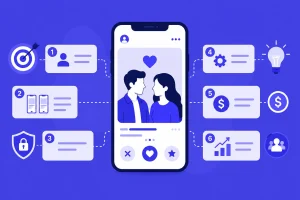
Understanding how to build a dating app like Tinder is not just a technical question. Before the first design file opens, there are strategic decisions that set the trajectory for everything else:
Choose Your Niche
Tinder went broad and it worked, but Tinder also had first-mover advantage and hundreds of millions of dollars. Most founders building today will get further, faster, by going narrow. Pick a group of people who feel underserved by existing platforms. Build something that feels like it was made specifically for them. Word-of-mouth in tight communities is more powerful than paid acquisition at scale, especially early.
Decide on Monetization Early
Freemium or subscription? In-app purchases or ad-supported? This is not a decision to revisit after the app is built. Monetization strategy shapes which features get built first, which get gated, and how the entire product hierarchy gets organized. Bolting a revenue model onto a finished product almost never converts as well as designing around it from the start.
Plan for Privacy and Safety
People are sharing photos of themselves, their location, and private thoughts on your platform. That is a real responsibility. GDPR for European users, clear data policies, encrypted storage, and transparent controls are the baseline for any serious app. For anything in the teen dating app space, add COPPA compliance, robust age verification, and parental consent mechanisms to that list. These are not optional at any stage of the build.
Hire the Right Development Partner
The team you pick will shape outcomes more than almost anything else. If you need a dedicated specialist to fill a gap, you can hire a dedicated developer through us. If you want a full team that owns the project end to end, we do that too. Either way, working with people who have shipped real consumer apps before is a different experience than working with generalists.
If you want a practical reference for how similar product architectures get built, our breakdown of Instacart clone app development covers matching and real-time systems logic that transfers directly to this kind of project.
Why Choose BinaryMetrix for Dating App Development?
We have run dating app development like Tinder projects from discovery through launch for clients in the US and across Europe. What we have seen consistently is that the projects which go well are the ones where the client and the team are genuinely aligned on what success looks like before anyone writes a line of code. That alignment is something we work hard to establish early.
A few things clients mention when they talk about working with us:
- End-to-end ownership from concept to launch
- Transparent pricing and milestone-based delivery
- Post-launch support and long-term partnership model
- Expertise across Flutter, React Native, Swift, and Kotlin
- Proven track record with consumer-facing mobile apps
If you want a direct conversation about your idea and a realistic estimate, get in touch with BinaryMetrix. The consultation is free and we will not waste your time.
BinaryMetrix delivers dating apps that users actually keep. Let's make yours one of them.
Contact Us Now






 +91-7982030802
  +1(315) 585-1155