
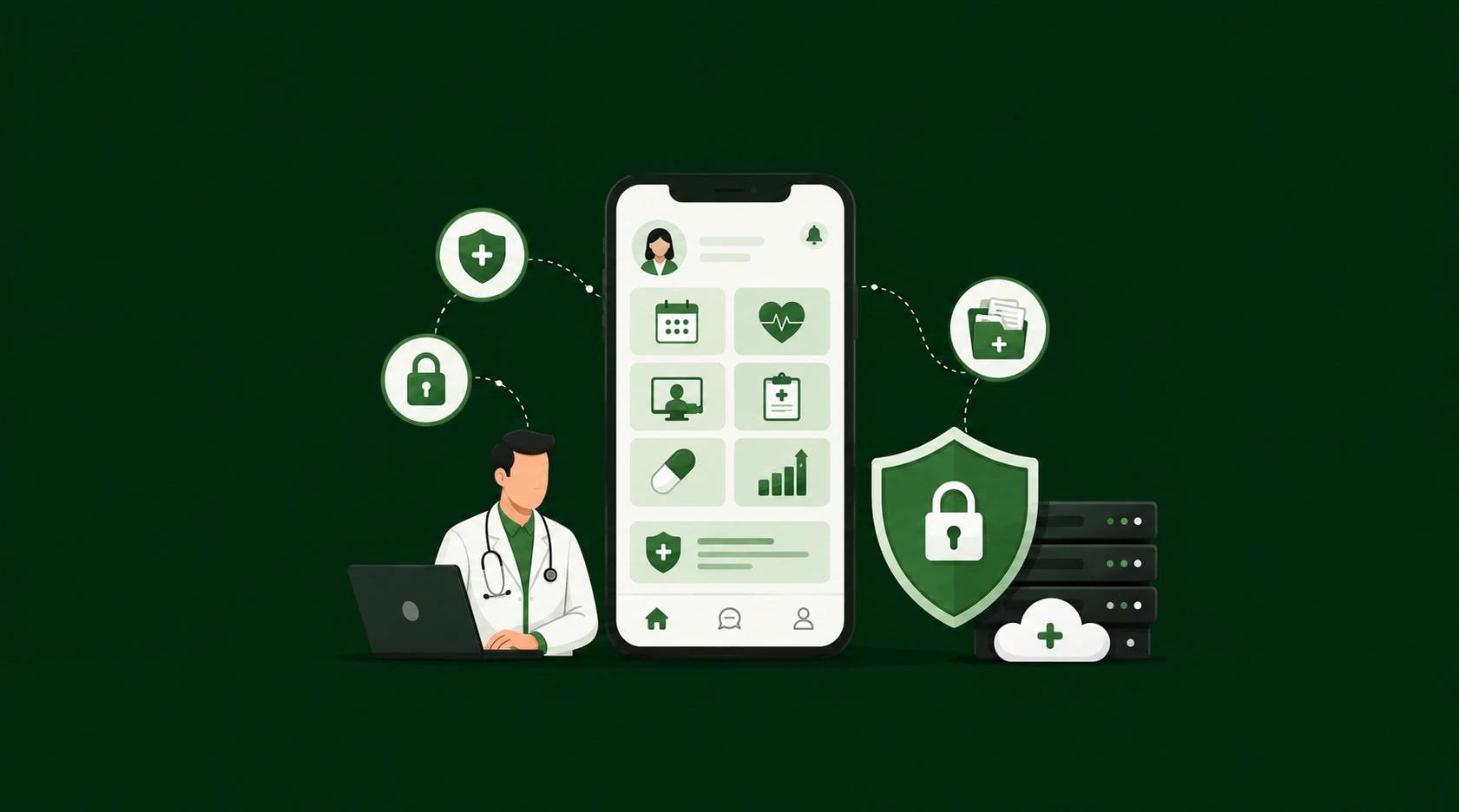
If you have ever tried to get a healthcare app built, you already know it is not like building a food delivery app or a fitness tracker. There is patient data involved. There are federal regulations to follow. And one mistake in how you store or transmit medical information can turn into a very expensive legal problem. This is exactly why choosing the right healthcare app development company matters more than most business owners realize until they are already three months into a project and something has gone wrong.
A good healthcare app development company does more than write code. It understands clinical workflows, patient privacy law, and the kind of testing that catches problems before they reach real patients. This article walks through what that actually looks like, what HIPAA compliance really requires, and how to pick a partner who won’t leave you exposed.
What Makes a Healthcare App Development Company Different from a Regular App Studio
Plenty of agencies can build a mobile app. Far fewer can build one that survives a HIPAA audit or integrates cleanly with an existing Electronic Health Record system.
A healthcare-focused development team brings a few things a general app studio usually doesn’t have:
- Familiarity with HIPAA, HITECH, and (for apps touching insurance data) HL7 and FHIR standards
- Experience with encrypted data storage and secure transmission protocols
- An understanding of how clinicians and patients actually use software during a visit, not just how it looks in a demo
- Processes for signing Business Associate Agreements (BAAs) with cloud vendors and subcontractors
- QA practices that specifically test for data leakage, session timeouts, and access control failures
None of this is exotic knowledge, but it takes real experience to get right the first time. A team that has shipped a handful of healthcare products will spot risks in week one that a generalist team might not catch until after launch.
Core Healthcare App Development Services You Should Expect
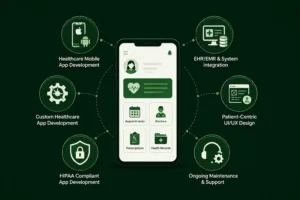
When you’re evaluating a healthcare app development company, ask what’s actually included in their process. A serious partner should offer:
- Healthcare mobile app development for iOS and Android, including native and cross-platform builds
- Custom healthcare app development tailored to your specific workflow rather than a repackaged template
- HIPAA compliant app development, covering encryption, access controls, audit logging, and secure hosting
- Backend architecture that can integrate with EHR/EMR systems, lab systems, and pharmacy networks
- UI/UX design built around patients who may be stressed, in pain, or simply not tech-savvy
- Ongoing maintenance, since healthcare software needs regular security patches as threats evolve
If a company can’t clearly explain how they handle even one of these, that’s worth pausing on before you sign anything.
Why HIPAA Compliance Isn’t Optional (and What It Actually Means for Your App)
HIPAA compliance isn’t a checkbox you tick after development wraps up. It has to be baked into the architecture from day one. Retrofitting compliance onto a finished app is possible, but it’s slower and more expensive than building it in from the start.
What HIPAA Compliance Covers in Practice
At a technical level, HIPAA compliant app development generally means:
- Encrypting Protected Health Information (PHI) both at rest and in transit
- Enforcing role-based access so users only see the data relevant to them
- Keeping detailed audit logs of who accessed what data and when
- Setting automatic session timeouts on devices left idle
- Signing a Business Associate Agreement with every third-party vendor that touches PHI, including cloud hosts and analytics tools
- Having a documented breach notification process in case something does go wrong
A healthcare software development company that has done this before will already have templates and workflows for most of this. One that hasn’t will be learning on your project, at your expense.
Common Types of Healthcare Apps Built Today
Healthcare app development services usually fall into a handful of recognizable categories, though most real-world products blend two or three of these:
- Telehealth and video consultation apps, connecting patients with providers remotely
- Patient portals, where users can view records, book appointments, and message their care team
- Remote patient monitoring apps, often paired with wearables to track vitals over time
- Medication management and reminder apps
- Mental health and therapy platforms, including mood tracking and secure messaging
- Appointment scheduling and practice management tools
- EHR-integrated clinical apps used directly by providers during patient visits
Each category comes with its own compliance considerations. A medication reminder app, for example, has a much smaller attack surface than a full patient portal syncing with an EHR, so the security work scales with what the app actually does.
A Real-World Example: Building a Telehealth App the Right Way
Picture a small multi-state therapy practice that wants to launch a telehealth app so patients can book sessions and join video calls without relying on a third-party platform. On paper this sounds simple. In practice, it involves a lot of decisions that most non-technical founders don’t anticipate.
The video calls need to run over an encrypted connection, not just a standard video SDK dropped in without configuration. Patient intake forms need to be stored separately from general app data, with access limited to the assigned therapist. Appointment reminders sent by text or email can’t include diagnosis details, only generic scheduling language. And because the practice operates in multiple states, the app needs to account for differing state-level telehealth regulations on top of federal HIPAA rules.
A medical app development company that has built something similar before will flag these issues during the discovery phase, before a single line of code is written. That’s the difference experience makes. It’s also a good illustration of why “just build the app” is rarely the full brief in healthcare.
Choosing the Right Healthcare Software Development Company
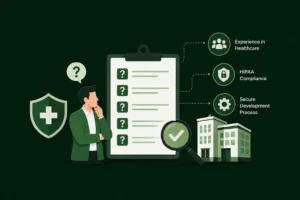
Not every development shop that says “we do healthcare” actually has the depth to back it up. Here’s what to look for.
Questions to Ask Before You Sign
- Can you walk me through a past project with similar compliance requirements?
- Who signs the Business Associate Agreement, and what happens if a subcontractor is involved?
- What does your QA process look like specifically for security and access control?
- How do you handle data hosting? Which cloud providers, and are they HIPAA-eligible services?
- What happens after launch? Is there a maintenance plan for ongoing patches and updates?
If the answers are vague or rushed, treat that as a signal. Healthcare projects reward teams that slow down and ask you hard questions too, about your data flows, your existing systems, and your compliance obligations.
You can review a healthcare app development company’s portfolio to see whether they’ve shipped comparable products before, and it’s worth having a direct conversation through their contact page to gauge how they think through your specific use case rather than just quoting a price.
Cost to Develop a Healthcare App
Pricing varies widely depending on scope, and anyone who quotes you a firm number before understanding your requirements should be treated with some skepticism. That said, a few factors consistently drive cost up or down:
- Whether you need native apps for both iOS and Android, or a single cross-platform build
- How much backend work is required, especially for EHR or lab system integrations
- The level of custom design versus using established UI patterns
- Whether video consultation, real-time messaging, or wearable device integration is included
- The depth of compliance documentation and security auditing needed
A simple patient scheduling app with basic HIPAA safeguards will cost meaningfully less than a full telehealth platform with video, EHR sync, and multi-state regulatory considerations. Ask any potential partner for a detailed, itemized estimate rather than a single lump figure, so you can see exactly what’s driving the cost.
Custom Healthcare App Development vs Off-the-Shelf Software
Some practices go with white-label telehealth platforms instead of building custom. That can work fine for a straightforward use case with a tight budget and timeline. But off-the-shelf tools come with limits: you’re stuck with someone else’s workflow, someone else’s branding constraints, and someone else’s release schedule for new features.
Custom healthcare app development makes more sense when your workflow doesn’t fit a generic template, when you need deep integration with existing systems, or when the app itself is meant to be part of your competitive advantage rather than just a utility. It costs more upfront, but you own the product outright and can evolve it as your practice grows.
How to Hire Healthcare App Developers Who Understand Compliance
If you’re looking to hire healthcare app developers directly rather than working with a full-service company, look past general mobile development experience. Ask specifically about HIPAA project history, encryption implementation, and whether they’ve worked alongside a compliance officer or legal team before. Developers who have only built consumer apps often don’t think in terms of audit trails and access logging by default, and that gap can be costly to fix later.
For teams that want flexibility without hiring in-house, working with an established partner to hire developers on a project or dedicated basis is often more practical than building an internal team from scratch, especially for a first healthcare product.
BinaryMetrix builds across native mobile app development and cross-platform app development, including dedicated iOS app development, Android app development, and Flutter app development for teams that want one codebase across platforms. You can see the broader scope of our mobile app development work, and read more about our approach on our about us page.
For practices exploring adjacent needs, a remote patient monitoring integration guide and a guide to FHIR-based EHR interoperability are useful topics to research separately, since they go deeper than what fits in a single overview article.
Final Thoughts
Choosing a healthcare app development company is a decision that affects patient trust, legal exposure, and how smoothly your practice or startup actually runs day to day. The right partner treats HIPAA compliance as part of the engineering process, not an afterthought bolted on before launch. Take the time to ask hard questions, review past work, and make sure whoever builds your app understands both the technology and the regulatory weight behind it.
If you’re ready to talk through your project, get in touch and we can walk through what a compliant, well-built healthcare app actually takes from your specific starting point.








 +91-7982030802
  +1(315) 585-1155