
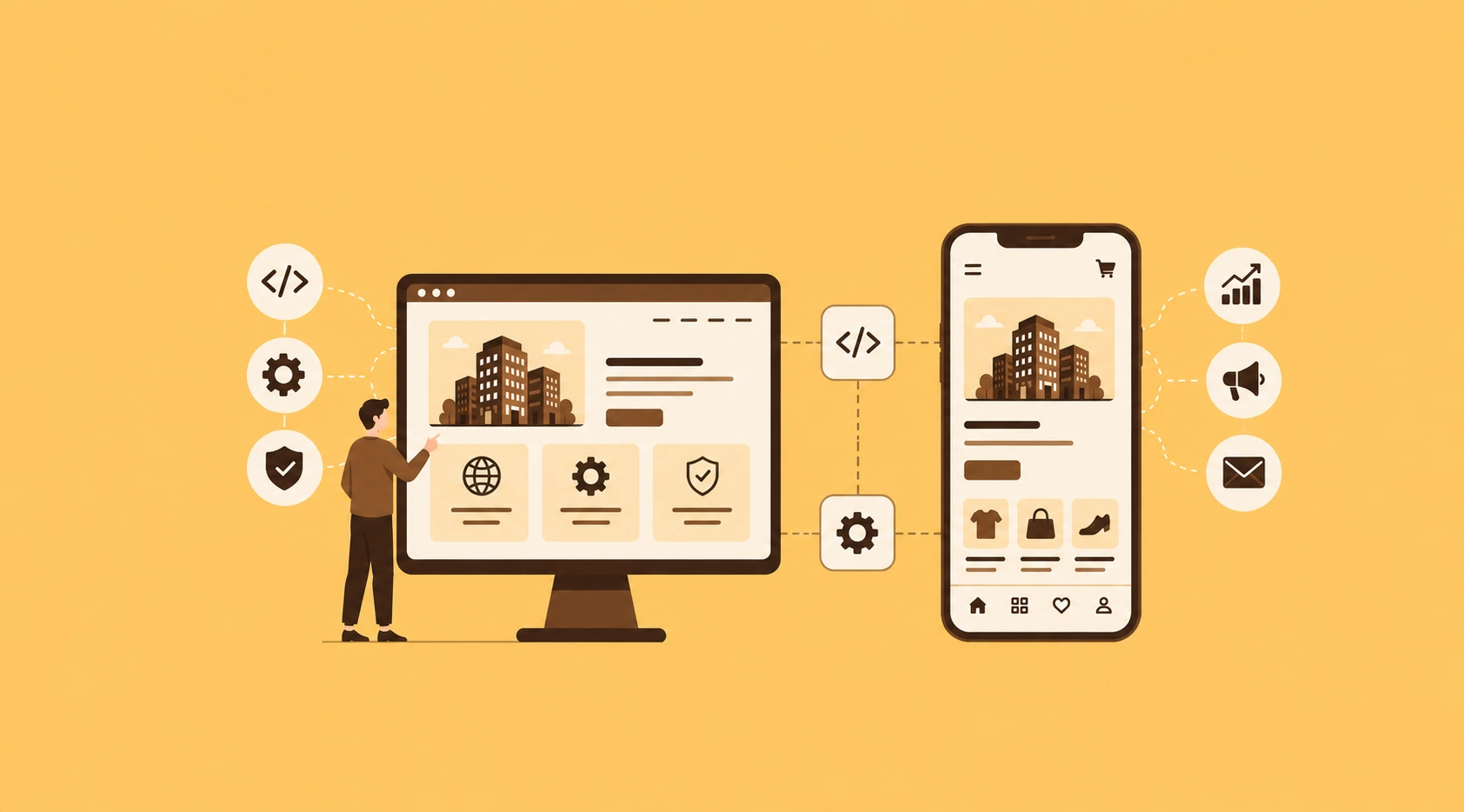
Most Shopify owners can feel it in their analytics before they can name it: more traffic from phones, more carts that start (and stall) on mobile, and customers who get impatient if a page takes more than a couple of seconds to load. That’s the backdrop for why Shopify Mobile App Development has stopped being a “someday” project for a lot of stores and started showing up on this year’s to-do list.
If you sell clothing, skincare, gadgets, home goods, whatever, the logic is pretty similar. An app gives shoppers a faster, more personal way to buy from you, and it gives you a direct line to them that a website just can’t match: push notifications, loyalty perks, and a checkout that takes seconds. Below, we’ll get into why that matters, how mobile app development for existing Shopify stores actually works behind the scenes, roughly what it costs, and what to look for in a development partner.
The Real Benefits of Shopify Mobile App Development for Your Business
Why are so many merchants suddenly interested in Mobile App Development for Shopify Store projects? A few reasons keep coming up.
Speed is the obvious one. Apps tend to load faster than mobile browsers once images and catalog data are cached on the phone, so there’s less waiting around for things to render. Then there’s the notification side of things. A push alert about a flash sale or an abandoned cart lands a lot more reliably than an email that might sit unread for days.
There’s also the home screen itself. An app icon sitting there is a small, constant reminder of your brand every time someone unlocks their phone, and over time, that adds up to more repeat visits than you’d expect. Apps can also get smarter the longer someone uses them, tracking what they browse and buy so recommendations start to feel relevant instead of random.
A few other things worth mentioning:
- Customers can keep browsing pages they’ve already loaded, even on a weak connection, which matters more than people assume when they’re shopping on the go.
- Saved payment details and one-tap reordering cut down on the friction that usually causes someone to bail at checkout.
- Face ID or fingerprint login removes the “ugh, what’s my password” moment entirely.
Add it all up, and it’s easy to see why brands that started with a simple online store are now looking at a Shopify Store Mobile App as the logical next move.
How to Convert a Shopify Store into a Mobile App
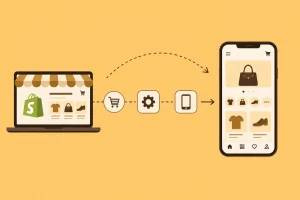
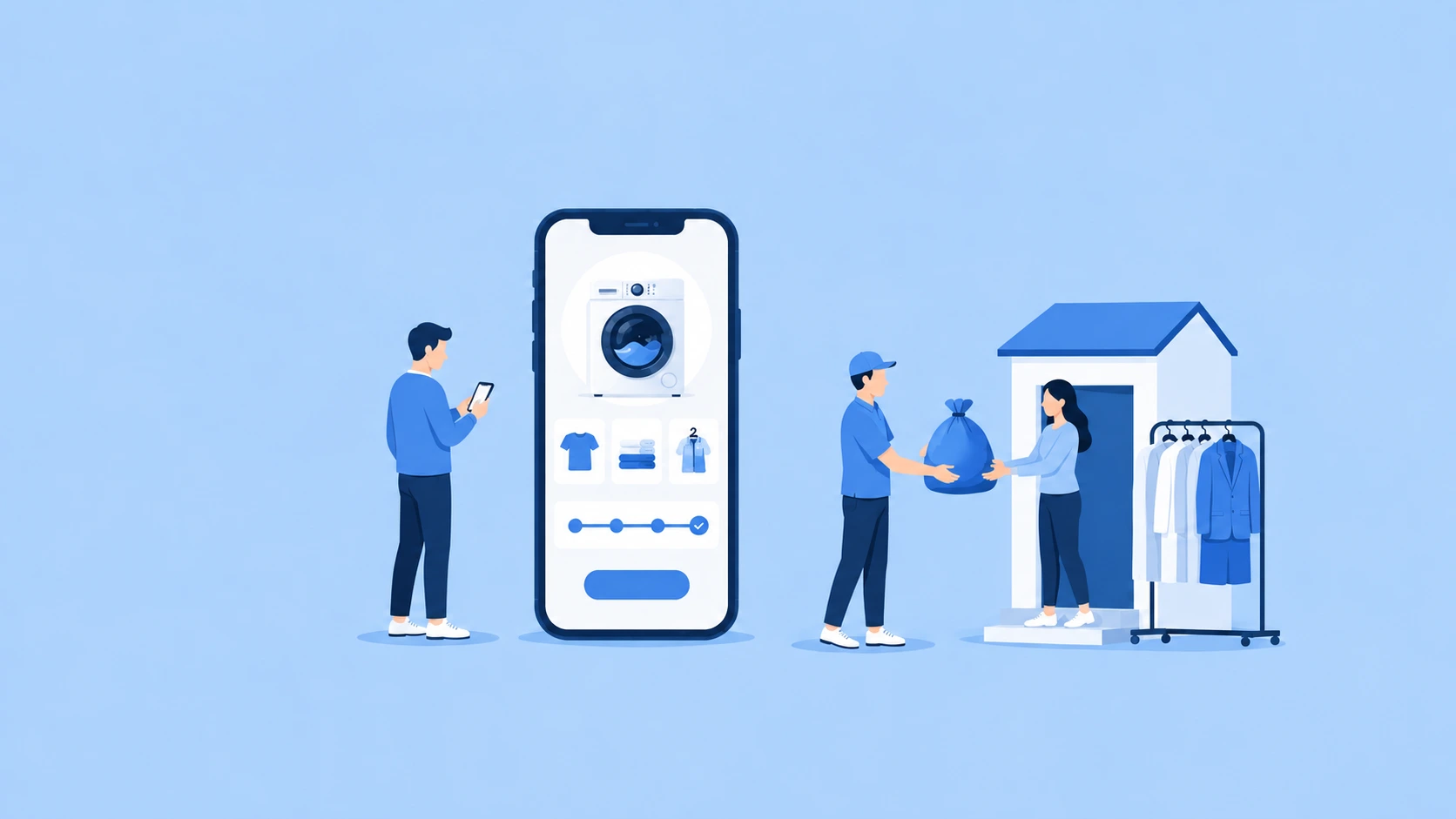
This is usually question number one, and for good reason. How to convert a Shopify store into a mobile app without breaking everything that’s currently working? Good news: you don’t have to touch what’s already there. Products, orders, customer accounts, inventory, all of it stays in Shopify exactly as it is. The app just becomes a new way in.
Here’s roughly how it goes, step by step:
First comes discovery: A development team looks at your current store, theme, and whatever apps or integrations you’re running, then figures out what needs to carry over. Next is API integration planning, where Shopify’s Storefront and Admin APIs get connected so your product catalog, pricing, inventory, and customer accounts stay in sync automatically.
From there, UI/UX design takes over: wireframes and screens get built out so the app actually feels like your brand instead of a generic shell. Then comes the build itself, either with native tools or a cross-platform framework, depending on budget and timeline. Payment and feature integration follow, wiring up secure checkout, loyalty programs, notifications, and any third-party tools you already rely on.
Before anything launches, the app gets tested across a range of Android and iOS devices. Once it passes, it goes through app store submission for the Apple App Store and Google Play Store. And after launch? That’s when ongoing support kicks in, updates, fixes, and new features, as the business grows.
That’s the short version of a Convert Shopify Store to Mobile App project. No catalog rebuilds, no data migrations to some other system. Everything still runs through the Shopify backend you already know.
Our team can review your existing Shopify store and map out the best path to launch your app, step by step.
Talk to Our TeamMust-Have Features for Your Shopify Store Mobile App
Not every feature belongs in every app, but a handful show up again and again in eCommerce Mobile App Development for Shopify projects because they consistently move the needle:
- Smart search and filters, so someone with a specific product in mind isn’t scrolling forever
- A wishlist or save-for-later option, giving people a reason to come back instead of just closing the tab
- Push notifications for order updates, cart reminders, and the occasional promo (used sparingly, ideally)
- One-tap checkout using saved addresses and payment info
- Loyalty or rewards built right into the app experience
- Real-time order tracking, which quietly cuts down on “where’s my order” emails
- In-app chat for quick questions, especially helpful for first-time buyers unsure about sizing or shipping
- Small polish items like dark mode and accessibility settings
If you’re not sure which of these are worth prioritizing, our mobile app design team can help map it out based on your industry and your customers.
Native vs Cross-Platform: Which Approach Fits Your Shopify App?
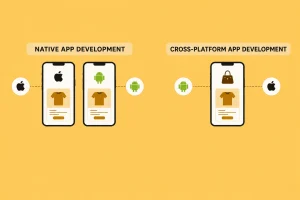
Once you’ve decided to build an app, there’s a fork in the road.
Native app development means two separate apps, one for Android and one for iOS, each built with the tools made specifically for that platform. Performance is excellent, and you get full access to whatever the device can do, but you’re maintaining two codebases, which usually means more time and a bigger budget.
Cross-platform takes a different route. With frameworks like Flutter or React Native, the app gets written once and runs on both Android and iOS. It’s typically faster to build, easier on the wallet, and for most eCommerce apps, the difference in feel is barely noticeable to the average shopper.
For a lot of Shopify merchants taking their first step into Shopify Mobile App Development, cross-platform ends up being the sweet spot. Our team handles Flutter app development, React Native development, Android app development, and iOS app development, so whichever path fits your budget and goals, there’s a route to get there.
We'll help you weigh the pros, cons, and costs based on your goals, so you can build with confidence.
Compare Your OptionsCost of Shopify Mobile App Development for eCommerce Businesses
Now for the part everyone’s actually wondering about. The cost of Shopify mobile app development for eCommerce businesses isn’t one fixed number; it shifts based on a few things.
Complexity is the big one. A simple browse-search-checkout app costs noticeably less than one with AR try-ons, deep personalization, or a built-in loyalty engine. Platform choice plays a role too, since cross-platform usually comes in cheaper than maintaining two separate native codebases. Design also matters: a fully custom UI with animations and brand-specific details takes more hours than working from a streamlined layout.
Then there’s everything that needs to be connected, subscriptions, reviews, marketing tools, loyalty systems, plus what happens after launch. Maintenance, fixes, and new features are part of the real cost over time, not a one-time line item.
Because no two stores are the same, the only number that actually means anything comes from talking through your specific setup. Still, plenty of merchants find that better retention and more repeat purchases make the investment in Shopify Mobile App Development Services pay for itself faster than expected.
Skip the guesswork. Share your requirements and get a detailed, no-obligation quote for your Shopify mobile app.
Request a Free QuoteWhy Partner with a Trusted Shopify App Development Company
Building an app that connects well to a Shopify store takes more than general app development experience. It takes a team comfortable with Shopify’s APIs, familiar with how eCommerce shoppers actually behave, and fluent in mobile UX.
That’s the lens BinaryMetrix works from. We combine our Shopify development background with mobile app development work, so the result feels like part of the store you already have rather than something bolted on afterward.
Need native app development? We do that.
Want one build that covers both major platforms without the extra overhead? That’s exactly what cross-platform app development is for, and it’s one of the most common requests we get.
That’s why choosing the right development partner matters.
Picking the right Shopify App Development Company matters more than people sometimes realize. Your app is often the first thing a customer sees from your brand on a device they carry everywhere. Done well, it becomes one of your best sales channels. Done poorly, it quietly works against you.
Final Thoughts
Turning a Shopify store into a mobile app isn’t just a trend anymore. It’s quickly becoming something shoppers expect by default. With a thoughtful approach to Shopify Mobile App Development, you can give customers a faster, more personal way to shop while opening up new ways to bring them back.
If you’re starting to think about what that could look like for your store, we’re happy to talk through the options, map out features, and put together a clear estimate based on what you actually need. Contact us whenever you’re ready, and let’s figure out the right next step for your brand’s mobile presence.
From design to app store launch, our team handles the entire process so you can focus on running your business.
Start Your Project






 +91-7982030802
  +1(315) 585-1155