
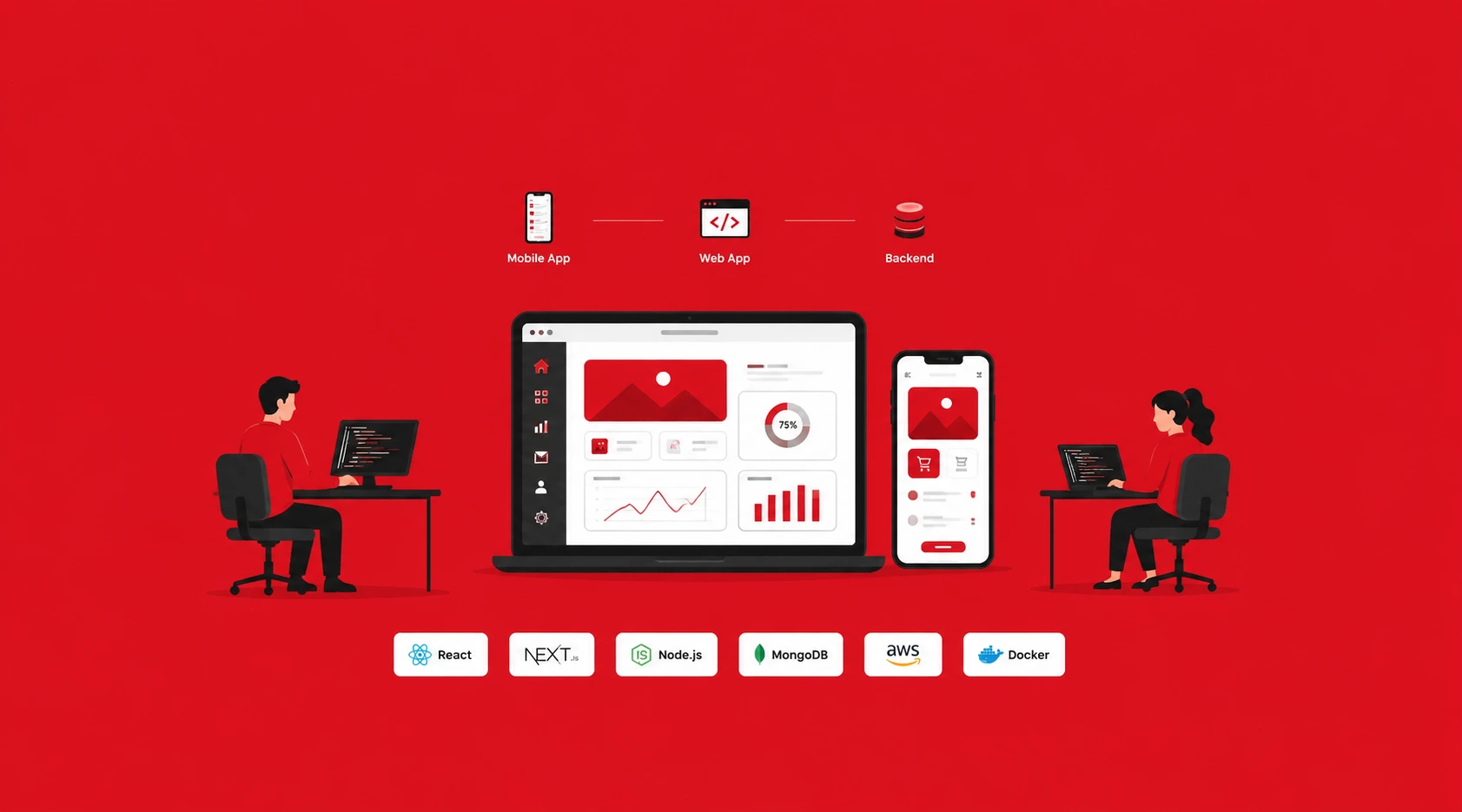
Every modern business needs more than just a simple website or a basic app. Customers expect smooth, fast, and reliable experiences whether they’re on a laptop, a tablet, or a phone. Meeting that bar takes a full stack app development company that can handle the whole system, not just one piece of it.
At BinaryMetrix, we work as a full stack app development company for businesses across the US, Canada, and Europe. Our team builds the interface people see, the server logic running behind it, and everything that connects the two, so nothing gets lost between a good design and a working product.
This guide covers what a full stack app development company actually does, why it beats hiring separate vendors for the front end and back end, how our process works, and what to look for when you’re choosing a partner for your own project.
What Is Full Stack Development?
Full stack development means building both the front end and the back end of a website or mobile app as one connected system, instead of splitting the work across separate teams.
- Frontend (user side): the layouts, buttons, forms, menus, and navigation people interact with directly. A well-built frontend makes the difference between an app people enjoy and one they abandon.
- Backend (server side): the engine behind the interface. It manages servers, databases, business logic, and authentication, keeping everything secure and running correctly.
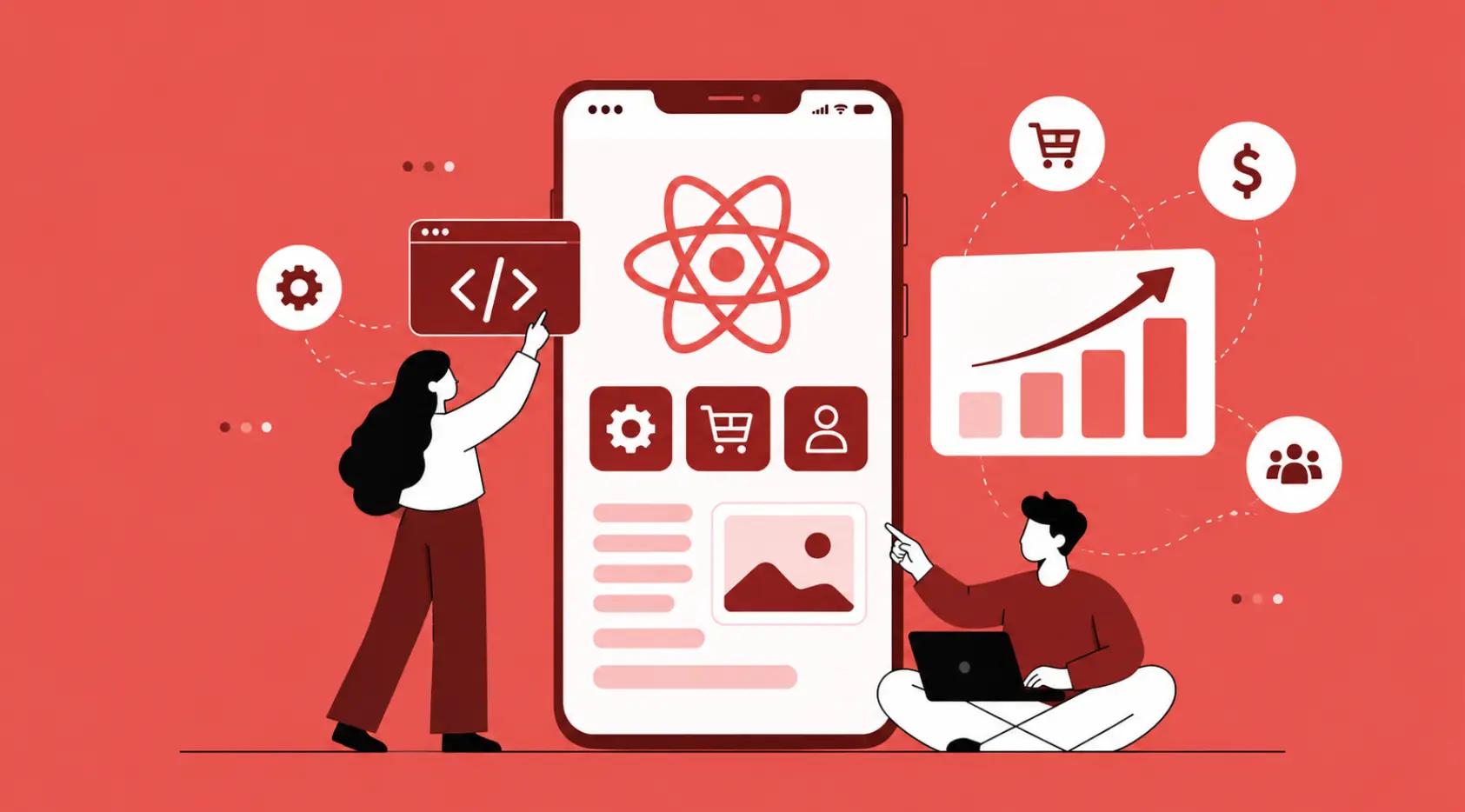
- Mobile builds: full stack work also covers mobile apps, whether native (iOS and Android built separately) or cross-platform using Flutter or React Native.
- Databases and cloud services: storing and processing data safely while keeping performance fast as usage grows.
As a full stack app development company, we design these layers together from day one, which keeps the whole product consistent instead of stitched together after the fact.
Why Businesses Choose a Full Stack Development Company
Think of building a house. You could hire separate contractors for plumbing, wiring, and finishing, and hope they coordinate. Or you could bring in one team that manages the entire build from foundation to final coat of paint. The second option is almost always faster and less stressful, and it works the same way in software.
Here’s why businesses lean toward a full stack app development company instead of piecing together specialists:
- Faster delivery. One team means fewer handoffs and fewer delays waiting on a second vendor.
- Lower overall cost. You’re not paying two separate teams to independently ramp up on the same product.
- Fewer integration bugs. The people who build the API also build the screen calling it, so mismatches get caught early instead of in production.
- Easier scaling. A full stack team can add new features or a second platform without rebuilding the system from scratch.
- One point of accountability. If something breaks, there’s a single team responsible for the fix, not two agencies pointing at each other.
We’ve seen the alternative go wrong more than once. A logistics client came to us after two separate freelancers had split their mobile app: one handling the interface, another handling the server. Drivers kept getting logged out mid-shift because the session handling on the back end didn’t match what the app expected on the front end. As a full stack mobile app development company, we rebuilt the authentication flow end to end, testing both sides together instead of separately. The fix held because one team understood the whole system, not just half of it.
Our Process as a Full Stack App Development Company
Every project at BinaryMetrix follows a structure we’ve refined across dozens of builds. It keeps timelines honest and keeps you informed at every stage.
- Discovery and Planning: We start by understanding your business goals, your users, and your competitors, then map out a roadmap that fits your budget and timeline.
- Design and Prototyping: Before any code gets written, we build wireframes and clickable prototypes so you can see how the product will look and function.
- Development: Front end, back end, and database work happen together on shared sprints, not in separate silos.
- Testing and Quality Assurance: We test speed, security, usability, and device compatibility, with a specific focus on integration points between layers, which is where most bugs hide.
- Deployment: We launch on secure, scalable infrastructure with minimal downtime.
- Post-Launch Support: Our relationship doesn’t end at launch. We provide monitoring, updates, and new features as your product and user base grow.
Full Stack Development Company Services at a Glance
| Service Area | What’s Included | Common Use Case |
| Full Stack Web Development | Front end, back end, database, hosting | SaaS platforms, client portals, internal tools |
| Full Stack Mobile App Development | iOS, Android, or cross-platform builds with a shared back end | Consumer apps, on-demand services, loyalty apps |
| Custom App Development | Tailored architecture for unique business logic | Marketplaces, booking systems, fintech tools |
| Web and Mobile App Development Services | Combined web and mobile from a single codebase and data layer | Startups launching on multiple platforms at once |
| Ongoing Maintenance | Bug fixes, security patches, feature additions | Any live product post-launch |
Industries We Work With
As a full stack app development company, our expertise spans several sectors, which lets us bring patterns and lessons from one industry into another:
- E-commerce and retail: shopping platforms, secure payment flows, and inventory systems
- Healthcare and fitness: patient management tools, telehealth platforms, and fitness tracking apps
- Education: learning management systems and mobile study tools
- Finance: banking and payment apps built with security as a first-class requirement, not an afterthought
- Travel and hospitality: booking engines and reservation platforms
- Entertainment and media: streaming platforms and community apps
Hire Full Stack Developers or Go With Specialists?
Not every project needs a full stack team. If you already have a stable back end and just need a redesigned interface, a front-end specialist alone might be enough. But most new products, and most businesses replacing an aging system, do better with a team that can reason about the whole architecture at once.
Signs it’s time to hire full stack developers rather than individual specialists:
- You’re building from scratch and don’t have a locked architecture yet
- Your current codebase is split across disconnected teams
- You need a mobile app and a web app that share user accounts and data
- You want one team accountable for uptime, security, and performance across the entire product
Custom full stack development services tend to outperform assembling freelancers project by project, mainly because consistency in code quality and communication compounds over the life of a product.
What to Look for in a Full Stack App Development Company
Not every agency that calls itself full stack actually operates that way. Before signing a contract, ask:
- Can they show real, completed products they built end to end, not just design mockups?
- Do they have in-house expertise in the frameworks and mobile platforms you need?
- What does their integration testing process look like specifically?
- Who owns your codebase and infrastructure once the contract ends?
- How do they plan for scaling if your user base grows faster than expected?
A serious full stack mobile app development company should answer all of these directly and point you to real work, not just describe their process in the abstract. If you want a deeper checklist specifically for website partners, our guide on choosing the best custom website development agency covers similar ground from the website side.
How BinaryMetrix Builds Full Stack Products
Our developers work across React, Angular, Node.js, Django, and Flutter, which lets a project move from a web app development engagement into a companion mobile app development build without bringing in a new vendor or re-explaining the business logic from scratch.
For clients who need both platforms from day one, our cross-platform mobile app development services share a single codebase across iOS and Android, which keeps costs down without sacrificing performance. For teams that need platform-native performance specifically, we also build through our native app development practice, including dedicated iOS app development work.
We’ve applied this same full stack model to more specialized products too, including event booking platforms that handle ticketing, real-time availability, and payment processing in one system. If you’re not ready for a full custom build yet, our hire developers page is a good starting point for scoping a smaller engagement first.
Looking ahead, we’re also expanding into full stack e-commerce development guides, an area with its own set of considerations around inventory, checkout flow, and payment security that we’ll be covering in more depth soon.
Final Thoughts
Choosing a full stack app development company isn’t just about finding people who can write code. It’s about finding a team that holds the whole product in their head at once, from the database schema to the button someone taps on their phone. That kind of ownership is what keeps products stable as they scale, and it’s what separates a smooth launch from a stressful one.
If you’re planning a new build or trying to untangle a product that’s outgrown its current setup, we’d be glad to talk through what a full stack approach could look like for your situation.






 +91-7982030802
  +1(315) 585-1155