
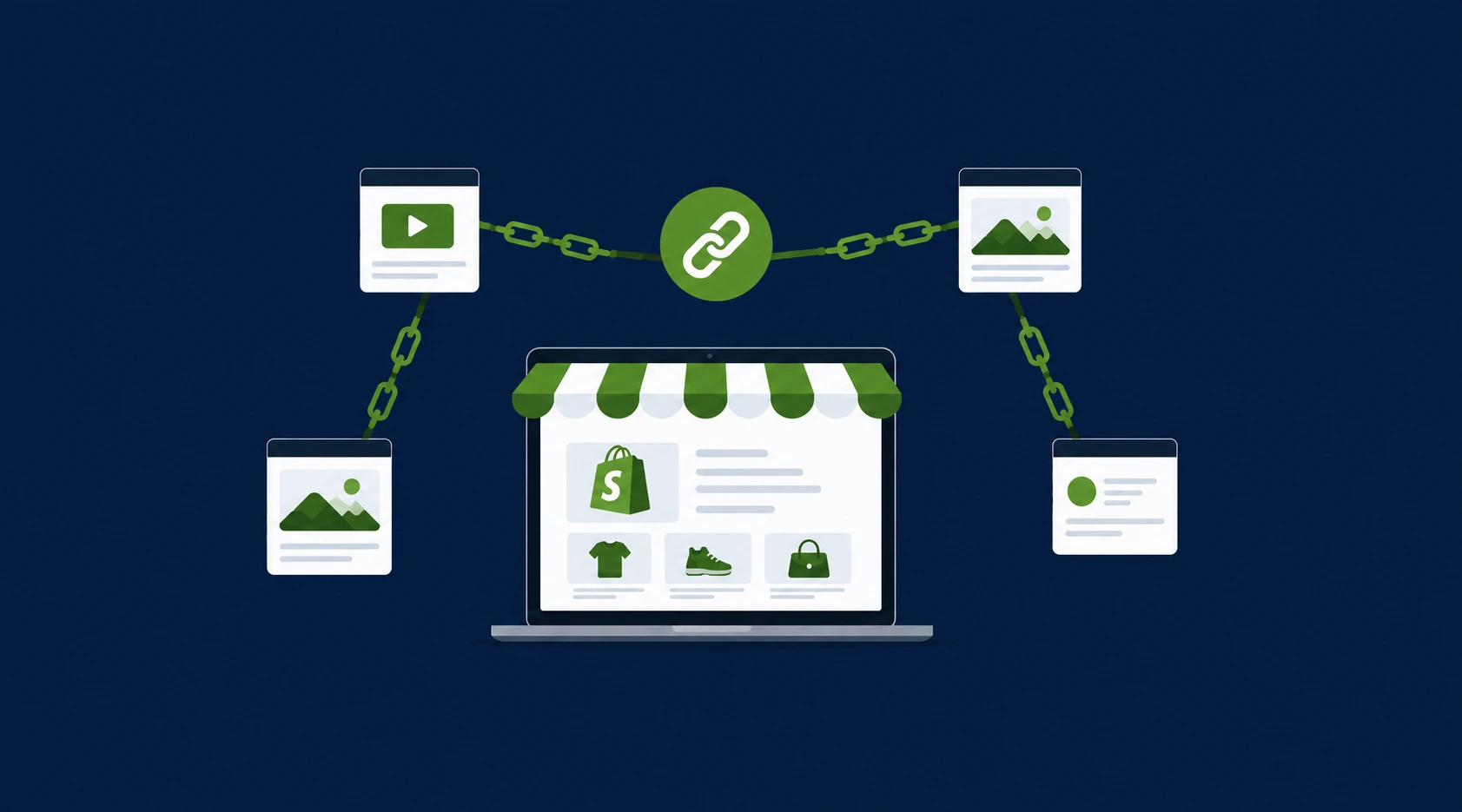
Here is something most Shopify store owners figure out a little too late: good products and a clean storefront are not enough to rank. Not even close. You can have the fastest load time on the block and still watch competitors with mediocre stores outrank you every single month. The reason, more often than not, comes down to ecommerce link building.
Backlinks are how Google decides who to trust. When a real, relevant website links to your store, that is a credibility signal the algorithm takes seriously. And yes, it still matters in a big way, despite what you might have read about content being king. Content without links is a castle with no roads leading to it.
This guide covers the strategies that actually move the needle for link building for Shopify stores. Not theory. Practical approaches you can start working on this week, whether your store is three months old or three years in.
Your Shopify store might have great products but zero authority in Google's eyes. We build the link profile that changes that.
Get a Free SEO AuditWhat Is Ecommerce Link Building and Why Does It Matter?
Let’s get the definition out of the way quickly. Ecommerce link building is the practice of getting other websites to hyperlink back to your store. Each of those links acts as a trust signal for search engines, telling them your site is worth surfacing to users.
For Shopify specifically, this matters more than store owners usually expect. Product and category pages are brutally competitive in most niches. You are often going up against brands with bigger budgets, longer histories, and larger content teams. Ecommerce backlinks help level things out over time by building your site’s authority in Google’s eyes.
And it is not just rankings. Quality links bring other benefits that compound:
- Referral traffic that converts better than cold paid traffic, in a lot of cases
- Faster indexing of new pages since Google follows link paths
- Higher domain authority that lifts your whole site, not just linked pages
- Brand visibility with audiences that already trust the site linking to you
Skip link building entirely, and your ecommerce SEO strategies will always have a ceiling. You can optimize every product page perfectly and still stall out on page two or three because competitors have built a stronger backlink profile over the years.
Strategies That Actually Work for Earning Links
Most Shopify stores skip this entirely and go straight to outreach. But without something worth linking to, no strategy will hold up. Content is what makes everything else in this list actually work.
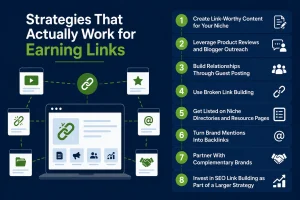
1. Create Link-Worthy Content for Your Niche
The cleanest way to earn ecommerce backlinks is to publish something people actually want to reference. It sounds obvious, but most stores never do this. They post product updates and generic blog content nobody outside their customer base would ever link to.
What earns links is content that serves a broader audience. Original research, detailed buying guides, industry data, or deep how-to articles that solve real problems. If your store sells kitchen equipment, a properly researched guide on cast iron maintenance or a comparison of induction versus gas cooking can pull links from food blogs, recipe sites, and home improvement publications for years.
A few content types that tend to earn links consistently in ecommerce:
- Original survey data or stats specific to your product category
- Long-form buying guides with genuine depth, not just product features
- Comparison content that helps buyers make an actual decision
- Seasonal trend pieces or niche industry roundups
Getting this content infrastructure right often starts at the store level. If you are building from scratch or rethinking your setup, a well-planned ecommerce website development approach makes it easier to publish and manage content that supports long-term link acquisition.
2. Leverage Product Reviews and Blogger Outreach
Product reviews from bloggers and niche content creators are one of the most reliable Shopify link building channels, and they tend to be underused by smaller stores. A genuine review almost always includes a link back to your product page, and it comes with something paid ads cannot replicate: an endorsement from a voice the reader already trusts.
The process itself is not complicated. You identify writers and creators whose audience matches your buyer profile, reach out with a product sample or discount offer, and ask for an honest review. What trips most people up is the outreach itself. Generic copy-paste emails go straight to trash. You need to read their content, reference something specific, and explain why your product is actually worth their time.
One more thing worth noting: always ask reviewers to disclose the relationship. Beyond being the right thing to do, it protects everyone legally and keeps the link itself clean in Google’s view.
Our team handles blogger and influencer outreach for Shopify stores from finding the right contacts to sending emails that get replies.
Explore Our Link Building Services3. Build Relationships Through Guest Posting
Guest posting gets dismissed sometimes as an outdated tactic, but that is mostly because people do it wrong. Spammy guest posts on irrelevant low-traffic sites are worthless, sure. A thoughtful, well-written article on a high-authority website in your niche? That is one of the more dependable ways to get backlinks for an online store, and the effect tends to stick.
The selection process matters more than the writing itself. Prioritize sites that have real readership, active comment sections, and content that overlaps with your customer’s interests. A guest post on a site with genuine domain authority in your space is worth more than ten posts on sites nobody visits.
Pitch topics your customers search for but that your own site has not covered yet. Position yourself as someone with real expertise, not someone looking for a link. Editors can tell the difference immediately, and the ones running quality publications will only work with the former.
This feeds naturally into ecommerce SEO strategies at a bigger level too, since guest posts expose your brand to new audiences while building your link profile at the same time.
4. Use Broken Link Building
Broken link building is one of those tactics that feels almost too simple when you first hear it. You find dead links on relevant websites, check whether you have content that covers the same topic, and reach out to suggest your page as a replacement. That is really it.
Tools like Ahrefs or SEMrush can surface broken links across sites in your niche. Once you spot one pointing to outdated or removed content, check if your store or blog has something that fills the same gap. If it does, a short, friendly email to the site owner explaining the dead link and offering your page as an alternative often gets a response.
What makes this work is that you are solving a problem for them, not just asking for a favor. Webmasters do not want broken links sitting on their pages. That small shift in framing dramatically improves response rates compared to cold outreach. And since the links come from genuine editorial decisions, this is one of the cleaner ecommerce backlink building techniques from an algorithmic standpoint too.
We run ongoing broken link prospecting and outreach as part of our ecommerce SEO packages, so you get the wins without the manual work.
See Our SEO Packages5. Get Listed on Niche Directories and Resource Pages
Generic web directories are mostly a waste of time at this point. But niche directories, ones built specifically around your product category or industry, are a different story. These listings carry relevance signals because the directory itself is topically aligned with what you sell.
A handmade goods store getting listed on artisan craft directories. A fitness brand appearing on wellness resource pages. A pet supply store showing up in curated lists for pet owners. These are not massive link wins on their own, but they add up, and many of them are free submissions.
Resource pages follow similar logic. Plenty of bloggers and industry sites maintain curated lists of tools, brands, or products worth knowing about. Getting added to a few of those lists is both a backlink and placement in front of an audience that came looking for exactly what you sell.
Keeping your Shopify SEO sharp across product pages and your homepage, with clean meta titles, descriptions, and structured data, makes it easier for directory editors to pull accurate information when they add your listing. Sloppy on-page details create friction that sometimes kills an otherwise easy win.
Want your store built on a foundation that supports this kind of visibility? Our Shopify development services cover everything from store architecture to speed and SEO readiness.
6. Turn Brand Mentions Into Backlinks
Every time someone mentions your brand online without linking to you, that is a missed opportunity sitting right there. These unlinked mentions are genuinely low effort to convert, and for stores with any degree of brand recognition, they can add up to a meaningful volume of backlink building for online stores each month.
Set up Google Alerts for your brand name, product names, and any distinctive phrases associated with your store. When a mention comes through without a link, reach out to the author. Keep it brief. Acknowledge that they mentioned you, thank them, and ask whether they would mind adding a link so readers can find you easily. Most say yes.
It works because you are not asking for anything they did not already decide to give you in spirit. The link is almost implied by the mention. Formalizing it just takes one short email. For ecommerce website SEO, this is one of those efforts that compounds quietly in the background while you focus on other things.
We track brand mentions across the web and convert them into live backlinks for your Shopify store every month.
Start Building Your Backlink Profile7. Partner With Complementary Brands
Co-marketing with brands that serve the same audience but do not compete with you directly is one of the more natural ways to earn links without it feeling like a campaign. A coffee equipment store partnering with a specialty roaster. A skincare brand working with a wellness blogger who runs their own product line. The overlap creates a genuine reason to collaborate.
Joint guides, co-authored blog posts, shared giveaways, or bundled promotions give both brands something to publish and promote. Both sites link to the shared content. Both audiences get introduced to a brand they had not encountered before. It is one of the few link building for Shopify stores tactics where the value flows clearly in both directions without one party doing all the heavy lifting.
If you are pairing this organic effort with paid acquisition, our digital marketing services can help build a channel strategy where each piece supports the others instead of operating in silos.
8. Invest in SEO Link Building as Part of a Larger Strategy
Here is something worth being honest about: link building does not rescue a technically broken store. It amplifies whatever foundation you have. If your Shopify store loads slowly, has messy URL structures, poor mobile usability, or thin product page content, backlinks will help a little but nowhere near what they would on a well-optimized site.
The stores that get the most out of ecommerce link building are the ones that already have clean on-page SEO, fast load times, and content worth landing on. Fix those things first, then build links. In that order, the results compound. In the wrong order, you are spending effort to drive traffic to pages that do not convert anyway.
If you want a team that handles both the technical foundation and the ongoing link building side, our SEO link building services are designed around measurable outcomes, not vanity metrics.
For a clearer picture of what a structured campaign looks like from day one, our backlinks creation packages lay out exactly what you are getting and why it moves the needle.
Final Thoughts
Ecommerce link building is not glamorous work. It takes time, consistency, and a willingness to do the outreach and content creation even when the results feel slow. But the payoff is real. Every solid backlink you earn keeps working quietly in the background, supporting your rankings and bringing in traffic long after you acquired it.
Start where your resources allow. Content creation and blogger outreach are manageable starting points for most stores. As momentum builds, layer in broken link building, brand partnerships, and a more structured approach to link building for ecommerce websites. You do not need to do everything at once.
If you want a team handling both the technical side and the ongoing SEO work, BinaryMetrix builds and grows stores that compete. From custom web development to search engine optimization, we focus on what actually moves rankings.
From technical SEO to a full link building strategy, BinaryMetrix handles the end-to-end work so your store gains authority and traffic month over month.
Talk to Our Shopify SEO Team





 +91-7982030802
  +1(315) 585-1155