
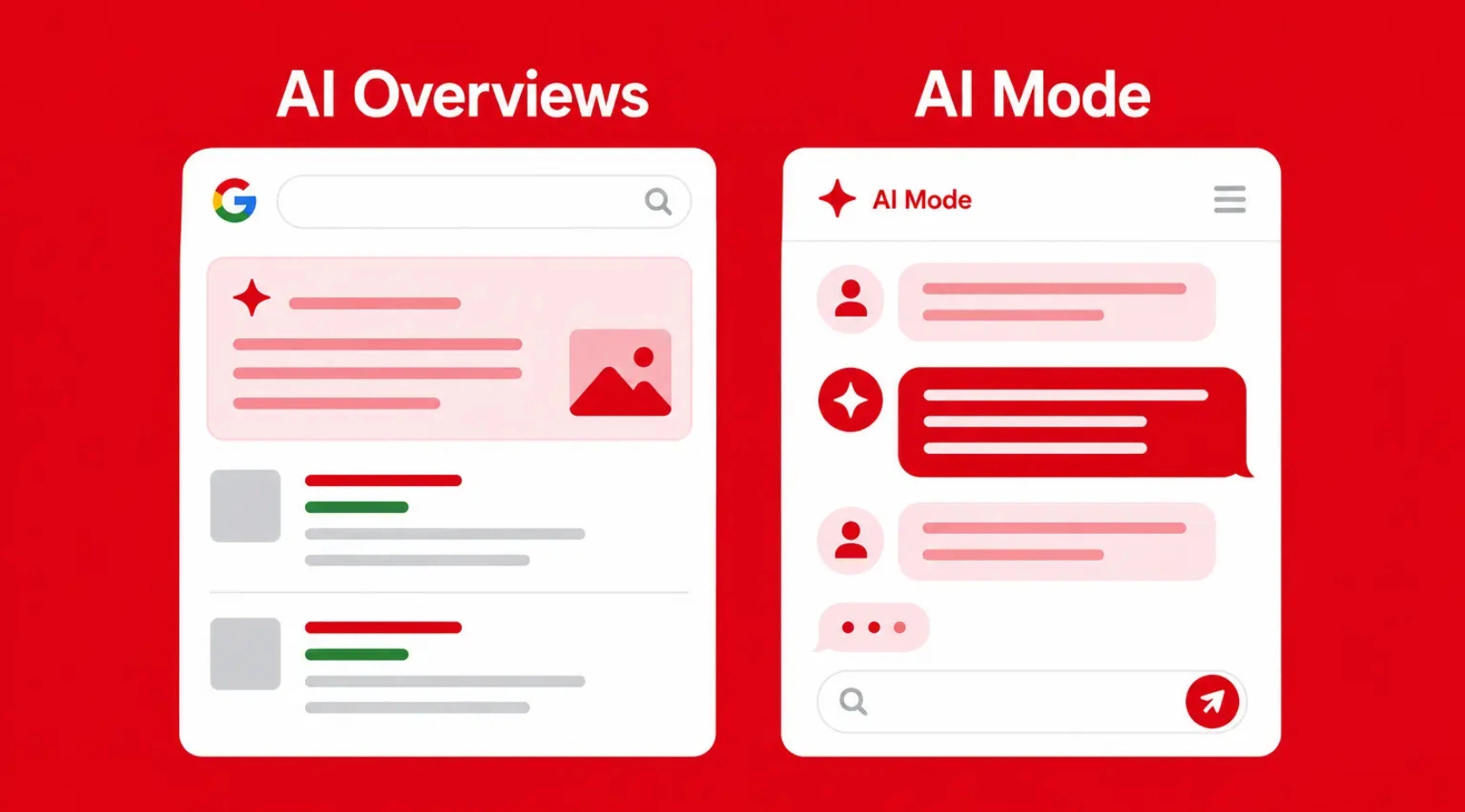
If you have been tracking your rankings and still feel confused about why your traffic numbers do not add up, you are not alone. Google now runs two distinct AI-powered search experiences side by side, AI Overviews and AI Mode, and treating them as the same thing is one of the fastest ways to misread your performance data and misallocate your SEO budget.
Both features rely on Gemini to generate answers, both cite sources, and both can quietly reduce clicks to your website. But they are built on different retrieval mechanics, they serve different search intents, and most importantly for SEO professionals, being cited in one does not mean you will be cited in the other. Recent research from Ahrefs found that AI Mode and AI Overviews cited the same URLs in only a small fraction of cases, which means optimizing for a single “AI search” strategy is no longer good enough.
This guide breaks down what AI Overviews and AI Mode actually are, how they differ, what each means for your traffic and CTR, and how to optimize for both. If your team needs a partner to translate this shift into a roadmap, the strategists behind BinaryMetrix Technologies’ digital marketing services work with brands every day to keep visibility intact as search moves further into AI-driven answers.
Why This Distinction Matters for Your SEO Strategy

For years, SEO strategy revolved around a single question: how do we rank higher in the traditional ten blue links. That question still matters, but it is no longer the only one. Now there are at least three layers of visibility to manage: your position in classic organic results, whether you are cited as a source inside an AI Overview, and whether you are referenced inside an AI Mode conversation.
Each layer has its own triggers, its own reporting quirks, and its own content requirements. A page that performs beautifully in AI Overviews might never appear in AI Mode, because AI Mode uses a completely different retrieval process. Confusing the two leads to wasted effort, like optimizing purely for AI Overview snippet structure when your actual traffic loss is happening inside AI Mode’s conversational sessions.
Understanding the mechanics behind AI Overviews SEO impact versus Google AI Mode SEO is what separates teams that adapt early from teams that spend months chasing a ranking metric that barely reflects reality.
What Are AI Overviews? Definition and How They Work
AI Overviews are AI-generated summaries that appear directly inside the traditional Google search results page, usually near the top, above the classic organic listings. Instead of forcing a user to click through several pages to piece together an answer, Google pulls information from multiple trusted sources and condenses it into a short, synthesized response.
How AI Overviews work:
- A user enters a standard search query, no special mode needs to be activated.
- Google’s system evaluates whether the query is a good candidate for a generative summary, typically informational or comparison-style queries.
- The AI Overview draws from a range of indexed, high-authority pages and stitches together a concise answer.
- Supporting links appear within or beside the summary, giving users the option to click through.
- The AI Overview sits within the same results page as traditional organic listings, so both experiences coexist on one SERP.
From a reporting standpoint, a click on a link inside the overview counts as a click for that page, and an impression is only logged once the overview is scrolled into view or expanded. The AI Overview itself is treated as a single position in the results, so every link inside it inherits that same position regardless of where it sits within the block. This is why visibility inside an AI Overview is less about chasing a rank and more about earning a seat as one of the supporting sources.
What Is AI Mode? Definition and How It Works

AI Mode is a separate, standalone search experience, essentially a conversational search interface layered on top of Google Search. Rather than appearing as a block within traditional results, AI Mode replaces the results page entirely with a chat-style interaction. Users actively choose to enter AI Mode, either through a dedicated tab or by triggering it with certain query types.
How AI Mode works:
- The user opens AI Mode intentionally, it is not an automatic addition to a normal search like AI Overviews.
- Instead of processing a single query, AI Mode uses a “query fan-out” technique, issuing multiple related searches at once (sometimes over a dozen) to gather a broader base of information.
- The system synthesizes those searches into one comprehensive, conversational answer, often longer and covering more entities than a typical AI Overview.
- Users can ask follow-up questions within the same session, and each follow-up is treated as a new query with its own fan-out process.
- AI Mode does not display the traditional ten blue links alongside its answer, it functions more like a dedicated AI assistant than a search results page.
Because AI Mode relies on this broader, multi-query retrieval, the sources it cites can look completely different from the sources cited in an AI Overview for a similar topic, even when the underlying need is nearly identical.
AI Overviews vs AI Mode: Feature-by-Feature Comparison
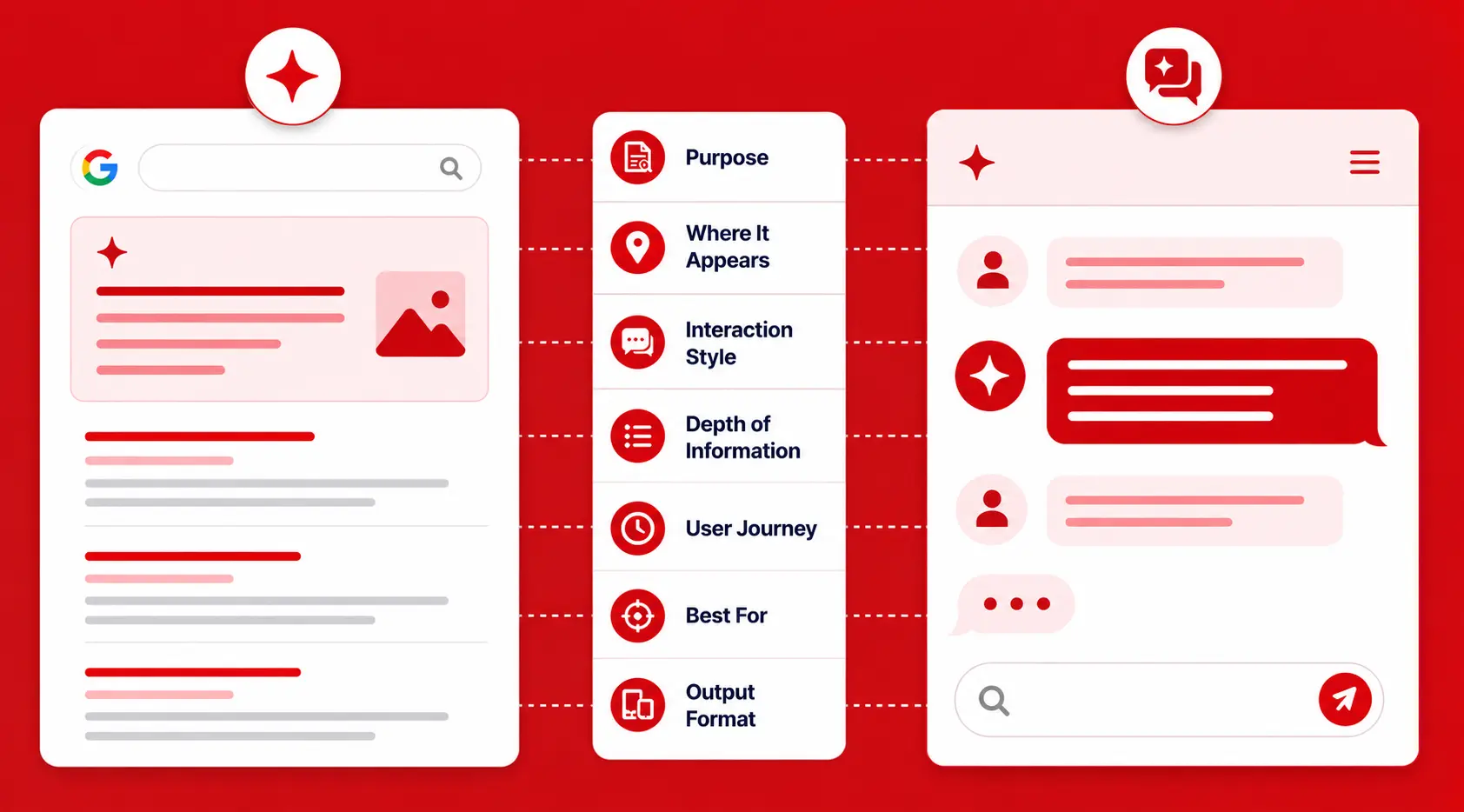
| Feature | AI Overviews | AI Mode |
|---|---|---|
| Trigger | Automatically appears on qualifying standard searches | User actively opens the AI Mode tab or interface |
| Format | Summary block embedded within the traditional SERP | Full-page, standalone conversational interface |
| Retrieval method | Synthesizes a small set of sources for a single query | Uses query fan-out, issuing multiple simultaneous searches |
| Sources cited | Supporting links shown within or beside the summary | Broader citation set pulled from multiple fanned-out queries |
| Traditional results | Coexists alongside the ten blue links | Traditional organic listings are not shown |
| Follow-up queries | Not supported in the same session | Fully supported, each follow-up refines the conversation |
| Ranking/reporting impact | Counted as one position in Search Console for all embedded links | Reporting mechanics are still evolving and less standardized |
| User intent covered | Quick-answer informational and transactional queries | Complex, exploratory, multi-step, and comparison-heavy queries |
| Response length | Concise, snapshot-style | Longer, more detailed, covers more entities |
| Session behavior | Often a single glance and possible click-through | Extended sessions with minimal exit to external sites |
How Each Impacts Organic Traffic and CTR

The AI Overviews SEO impact and the AI Mode impact on organic traffic are both real, but they show up differently in your analytics.
AI Overviews and CTR: When an AI Overview satisfies a user’s question directly on the results page, click-through rate to the underlying source pages tends to drop, particularly for straightforward informational queries, this is the well-documented “zero-click search” trend. Still, being cited as a source carries brand-visibility value even without a click, since users see your domain associated with a trustworthy answer.
AI Mode and organic traffic: The traffic risk here is steeper. Because AI Mode replaces the results page entirely and encourages extended, multi-turn sessions, users have even less reason to leave the interface. Early behavioral data suggests that once someone starts a conversation in AI Mode, they rarely click out to individual websites and instead keep refining the conversation. For businesses relying heavily on informational content, a growing share of demand may never reach their site at all.
The net effect for SEO teams: Rankings alone no longer tell the full visibility story. You need to track citation frequency across both experiences, monitor brand mentions inside AI-generated answers, and treat impressions and clicks as only part of a larger picture, exactly the kind of multi-layered tracking a dedicated SEO partner can help you set up correctly.
Optimization Strategies for AI Overviews and AI Mode
Optimizing for AI Overviews
- Structure content for extraction. Use clear headings, concise definitions, and direct answers near the top of the page.
- Strengthen E-E-A-T signals. First-hand experience, author credentials, and transparent sourcing improve your odds of being selected as a trusted reference.
- Use schema markup consistently. Structured data helps Google understand entities, relationships, and factual claims, improving inclusion odds.
- Target comparison and definitional queries. These are the most likely to trigger an AI Overview, so directly answer the “what is” and “X vs Y” questions your audience asks.
Optimizing for AI Mode
- Build depth, not just breadth. Because AI Mode fans out into multiple related queries, your content needs to comprehensively cover a topic cluster, not just a single keyword.
- Anticipate follow-up questions. Structure content so it can answer natural next-step questions, since AI Mode sessions are built around iterative refinement.
- Prioritize unique, experience-based insight. Generic information is easy for AI Mode to synthesize from many sources at once. Original data and proprietary insight are harder to replace.
- Maintain clean technical foundations. Fast load times, clear architecture, and accurate structured data help the fan-out retrieval process find and trust your pages.
- Earn authoritative citations elsewhere. A strong SEO link building foundation still signals trust to Google’s systems, and pages with credible external references are more likely to be treated as reliable sources in a fan-out retrieval process.
Because these two experiences require overlapping but distinct tactics, most teams benefit from an integrated content and technical SEO strategy rather than treating AI Overviews and AI Mode as separate side projects. If you want a structured plan instead of guesswork, BinaryMetrix Technologies’ search engine optimization team builds exactly this kind of dual optimization into its process.
Common Misconceptions About AI Overviews and AI Mode

“They are basically the same feature.” They share an underlying model family, but retrieval mechanics, citation patterns, and intent coverage are meaningfully different. Optimizing for one does not guarantee visibility in the other.
“If I rank well organically, I will automatically be cited.” Traditional ranking signals matter, but citation is a separate selection process based on how extractable, trustworthy, and synthesizable your content is.
“AI Mode is still an experimental feature I can ignore.” AI Mode has expanded rapidly since its 2025 launch and now reaches a large number of countries and languages, treating it as a side experiment is risky for any content-dependent business.
“Zero-click means zero value.” A citation without a click still builds brand awareness and trust, especially for queries higher in the consideration funnel.
“SGE vs AI Mode is a different comparison from AI Overviews vs AI Mode.” SGE (Search Generative Experience) was the earlier experimental label for what evolved into today’s AI Overviews and AI Mode products. Researching SGE vs AI Mode really means comparing the predecessor to its current, more advanced iteration.
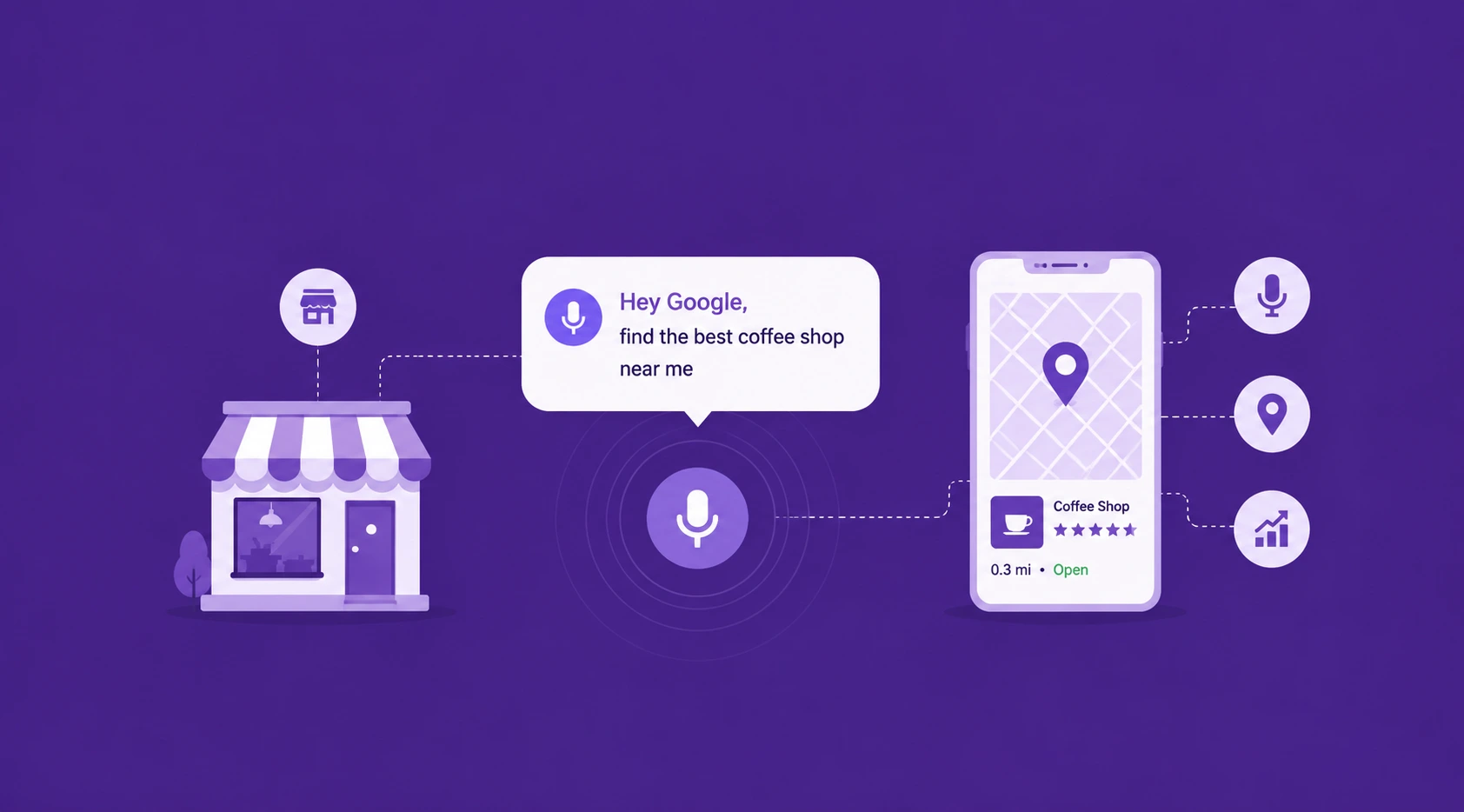
This shift toward conversational, answer-first search is not limited to text queries either. If you have not yet looked at how voice search optimization fits into this picture, it is worth a read, since many of the same E-E-A-T and structured-data principles apply.
Conclusion: Actionable Takeaways for SEO Professionals
AI Overviews and AI Mode are not the same feature wearing two different outfits. They are distinct experiences with different triggers, retrieval mechanics, and implications for traffic and reporting. Treating them as one undifferentiated “AI search” bucket leaves gaps your competitors are already closing.
To move forward with confidence:
- Audit your content for extraction-friendly structure to support AI Overview inclusion.
- Build topic-cluster depth and anticipate follow-up questions to support AI Mode’s fan-out retrieval.
- Strengthen E-E-A-T signals and schema markup across your highest-value pages.
- Expand how you measure success beyond rankings alone, tracking citations, brand mentions, and assisted visibility.
- Reassess your keyword and content roadmap regularly, since both AI Overviews SEO impact and Google AI Mode SEO behavior continue to shift as Google refines these systems.
Search is no longer a single channel with one set of rules. It is a layered ecosystem where traditional rankings, AI Overview citations, and AI Mode conversations all compete for the same user attention, and getting ahead of that shift now is far easier than trying to catch up later.








 +91-7982030802
  +1(315) 585-1155