
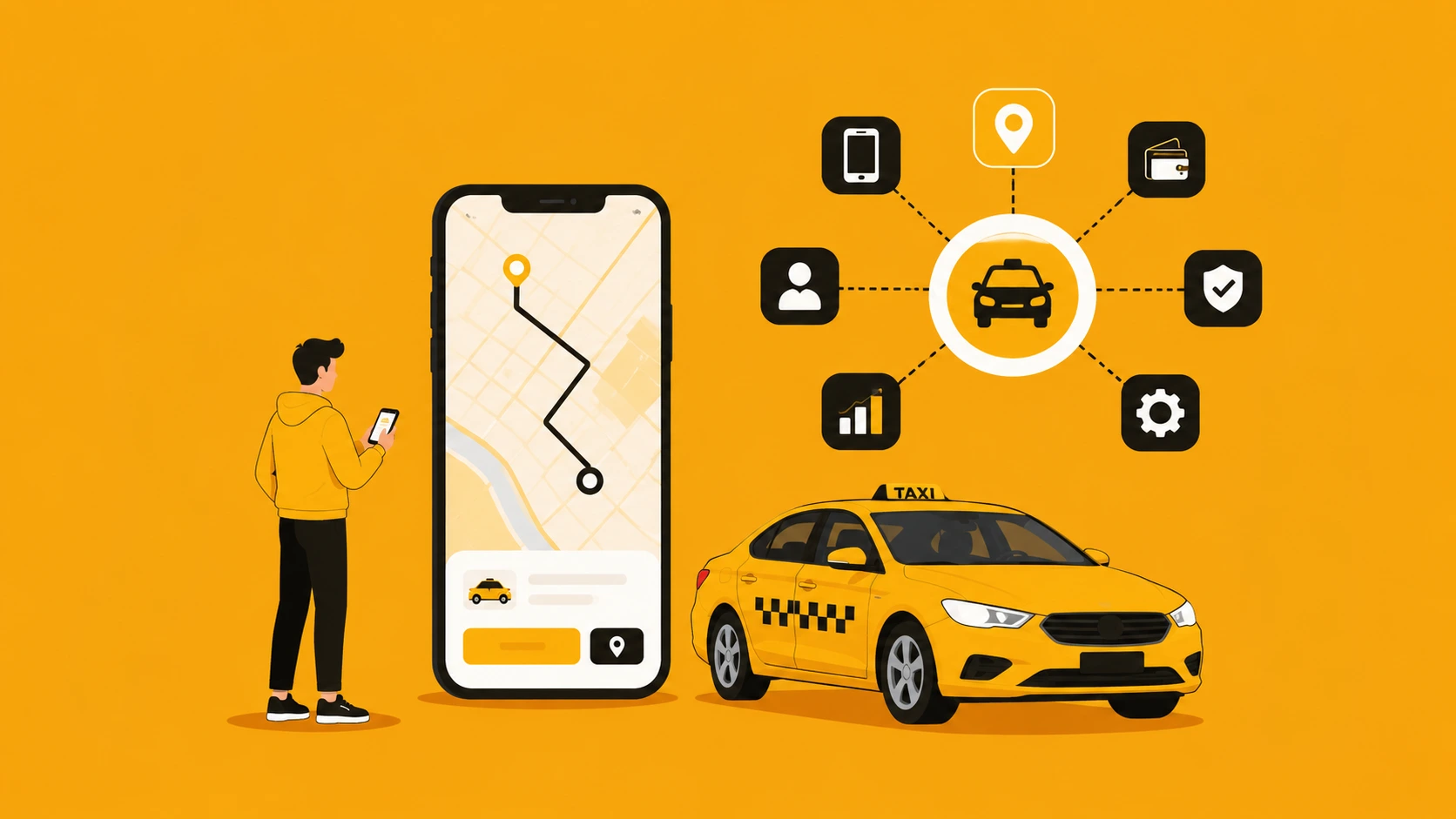
Ever wondered what it actually takes to build the next ride-hailing giant? You’re not the only one. Taxi app development has turned into one of the most requested mobile app development services we handle at BinaryMetrix, and honestly, that makes sense. The ride-hailing space keeps growing every year. Fleet owners, transportation startups, even old-school cab unions are all trying to grab a slice of it now. Uber already proved the model works at scale, so the real question isn’t whether building a ride-hailing platform is worth it. It’s how to pull it off without wasting time or budget. In this guide, we’ll break down what goes into building an app like Uber, from the features you can’t skip to tech stack choices and a realistic project cost, so you’re not going in blind.
Why Businesses Are Investing in Taxi App Development Right Now
Ride-hailing isn’t some niche Silicon Valley experiment anymore. Airports, hotel chains, corporate fleets, even regional taxi unions are exploring on-demand ride-hailing platforms just to keep up with the bigger national players. A few reasons this keeps picking up steam:
- Riders expect instant booking, live tracking, and cashless payments by default now, not as some bonus feature.
- Independent drivers want flexible platforms that actually pay out fairly and on time.
- Local operators can beat the big apps on pricing while still feeling modern and reliable.
- Fleet owners get to centralize dispatch, cut down idle time, and finally see what’s happening across their vehicles.
Because of this shift, taxi booking app development isn’t just for companies trying to copy Uber word for word. It’s really for anyone who wants to change how people get around a city, a campus, or even a smaller region.
How Does a Taxi App Like Uber Actually Work
Before we get into features and pricing, it’s worth understanding the moving parts first. A typical ride hailing app development project usually involves three connected apps working together in real time:
The Rider App lets passengers request a ride, track their driver, pay for the trip, and leave a rating afterward.
The Driver App lets drivers accept or turn down trip requests, navigate to the pickup point, and keep tabs on their earnings.
The Admin Panel is basically the control room, where the business manages drivers, riders, pricing, promotions, and any disputes that come up.
These three pieces talk to each other constantly through APIs, GPS data, and a matching engine that pairs riders with whichever driver is closest. Get any one of these wrong, and the whole experience falls apart pretty fast. That’s exactly why this kind of build needs careful planning from day one instead of a rushed weekend sprint.
Must-Have Features for a Ride-Hailing App
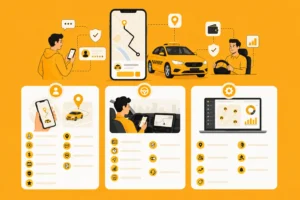
A solid ride sharing app development project needs way more than just a booking button. Here’s what riders, drivers, and admins actually expect from an app in 2026.
Rider App Features
- Simple sign-up with phone number or social login
- Real-time driver tracking on the map
- Fare estimation before booking
- Multiple payment options including cards, wallets, and cash
- Ride scheduling for future trips
- In-app chat and call with the driver
- SOS or safety button for emergencies
- Ride history and digital receipts
- Ratings and reviews for drivers
Driver App Features
We’ll cover this in more depth soon in Driver Onboarding Checklist for Taxi Apps, but here’s the short version for now:
- Easy onboarding with document verification
- Accept or decline ride requests with a timer
- Turn-by-turn navigation integration
- Real-time earnings dashboard
- Trip history and payout tracking
- Availability toggle for online and offline status
- In-app support for disputes or issues
Admin Panel Features
- Live map view of all active trips and drivers
- Driver and rider account management
- Dynamic pricing and surge configuration
- Promo code and discount management
- Analytics dashboard for revenue and trip data
- Dispute resolution tools
- Push notification management
Skip any of these and adoption tends to suffer once the app actually launches. It’s worth mapping out the full feature list before a single line of code gets written, trust us on this one.
Every taxi app doesn't need every feature on day one. Let's map out what actually matters for your launch.
Get a Free Feature ConsultationTaxi App Development Cost in USA
This is usually the very first question every founder asks us, and fair enough. The honest answer: pricing depends a lot on scope, platform choice, and how complex the feature list gets before launch. Here’s a rough breakdown based on the type of build:
- Basic MVP with core booking, tracking, and payment features typically starts in the lower five figures.
- Mid-range app with driver and rider apps, admin panel, and standard integrations lands somewhere in the mid five-figure to low six-figure range.
- Enterprise-grade platform with advanced features like AI-based dispatch, multi-city support, and custom analytics can push past six figures.
A handful of factors move that final number around:
- Native versus cross-platform development approach
- Number of third-party integrations, like payment gateways and mapping APIs
- Design complexity and how many screens you actually need
- Backend infrastructure and expected scale
- Post-launch support and maintenance needs
If you want a number tailored to your actual requirements instead of a rough average, it’s worth requesting a free project estimate so you’re working with real figures.
Best Tech Stack for Taxi App Development
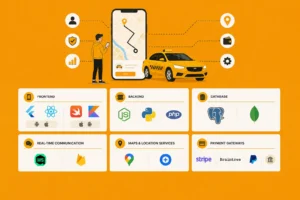
Picking the right technology stack affects everything: app performance, how well it scales, and what maintenance looks like years down the road. Here’s what we typically recommend for a build that won’t need a rewrite in two years.
Frontend (Rider and Driver Apps)
For cross-platform app development, Flutter and React Native tend to be the top picks, since you build once and ship to both iOS and Android without burning through extra time and budget. If your project needs platform-specific performance or deeper hardware access, native app development using Swift for iOS and Kotlin for Android is still the safer bet.
Backend
A dependable backend is really the backbone of any ride hailing app development project. Node.js tends to be the go-to choice since it handles real-time data, like live location updates and trip matching, efficiently. Python and PHP show up often too, depending on the team’s expertise and the scale you’re targeting.
Database
Most taxi apps pair PostgreSQL for structured data, think user accounts and trip records, with MongoDB for fast-changing data like live locations.
Real-Time Communication
WebSockets or Firebase Cloud Messaging usually handle live tracking and instant notifications between riders and drivers.
Maps and Location Services
Google Maps Platform is still the industry standard for geolocation, route optimization, and ETA calculation. Some businesses layer in Mapbox too, mostly for more custom map styling.
Payment Gateways
Stripe, Braintree, and PayPal get used the most for secure in-app payments, though region-specific gateways sometimes get added depending on the target market. We’re actually planning a dedicated deep-dive on Best Payment Gateways for Ride-Hailing Apps soon for founders who want a closer side-by-side before committing.
Getting this combination right is one of the bigger decisions in the whole build, honestly, since switching stacks halfway through a project gets expensive fast and slows everything down.
Native, Flutter, or React Native, the right choice depends on your goals. We'll help you pick the one that scales with you.
Talk to Our Tech TeamWhat On-Demand Ride-Hailing Platforms Need Beyond Features
Building the app itself is only half the story. A few things founders tend to overlook during on demand taxi app development:
- Driver supply matters more than app polish early on. Without enough drivers online, even the slickest app feels broken to riders.
- Regulatory compliance varies by city and state. Licensing, insurance, and background check rules aren’t the same across every US market.
- Surge pricing needs to feel fair, not exploitative. Get the dynamic pricing wrong and you’ll lose rider trust fast.
- Scalability should be planned from day one. Expanding to new cities later shouldn’t mean rebuilding the backend from scratch.
Thinking through these details early saves a lot of time and money down the line, especially if expansion beyond one city is even a possibility.
Ride Sharing App Development vs Ride Hailing App Development
These two terms get thrown around interchangeably a lot, but there’s a real difference worth understanding before you start building.
Ride hailing app development refers to the classic Uber-style model, where a rider books a private trip and a driver gets dispatched exclusively to them.
Ride sharing app development refers to shared trips instead, where multiple riders heading the same general direction split a vehicle, usually at a lower cost per person.
Some businesses launch with just one model and add the other later once demand picks up. Deciding which model fits your target market from the start shapes your feature set, pricing logic, and matching algorithm pretty significantly.
How to Choose the Right Taxi App Development Company
Picking a development partner is one of the bigger calls in this whole process. Here’s what actually matters when you’re evaluating a development partner:
- A proven portfolio of ride-hailing or on-demand apps, not just generic mobile projects
- Clear communication and a defined project timeline
- Experience with real-time features like GPS tracking and live matching
- Transparent pricing without surprise costs after launch
- Ongoing support and maintenance options once the app goes live
At BinaryMetrix, our team has hands-on experience across mobile app development projects spanning several industries, including a previous taxi booking build for a US-based client. You can check out our work in our portfolio, and if you’re curious how a similar on-demand model plays out in a different industry, our breakdown of dating app development like Tinder walks through a comparable cost and feature structure. We stick to the same process on every project: discovery, planning, design, development, testing, and post-launch support, so nothing gets rushed or skipped.
Steps to Build an App Like Uber
Ready to actually move forward? Here’s a practical roadmap for how these projects usually unfold in practice:
- Market and competitor research to define your niche and target city
- Feature planning and scope definition based on budget and timeline
- UI/UX design focused on keeping things simple for both riders and drivers
- Backend and API development to power real-time matching and payments
- Frontend development for rider and driver apps, using native or cross-platform frameworks depending on your goals
- Testing across devices and real-world scenarios
- Launch and driver onboarding
- Post-launch monitoring, updates, and scaling
Every stage matters here, but rushing the planning phase is still the most common mistake we see founders make. A few extra weeks spent scoping properly at the start usually saves months of rework down the line.
Final Thoughts
Building an app like Uber is doable for businesses of pretty much any size, as long as the planning is solid and the tech choices are made with growth in mind. It isn’t just about copying an existing app feature for feature. It’s about figuring out what your local market actually needs and building around that. Whether you’re targeting one city or planning a multi-region rollout eventually, getting the fundamentals right from day one saves you time, money, and a fair amount of frustration later.
If you’re exploring taxi booking app development company USA options and want a team that gets both the technical side and the business side of ride-hailing platforms, get in touch with our team and we’ll walk through your project with you and give you an honest estimate.
Tell us about your idea and we'll walk you through cost, timeline, and the right tech stack, no pressure, just a clear plan.
Start Your Project








 +91-7982030802
  +1(315) 585-1155