
✅

Message Sent!

Your enquiry has been sent successfully. Our team will contact you soon.

Mobile App Development

How to Build an On-Demand Service App With Real-Time Tracking and Booking

Nov 02, 2026
Kailash Mishra
Share
How to Build an On-Demand Service App With Real-Time Tracking and Booking
Home › Blog › Mobile App Development › How to Build an On-Demand Service App With Real-Time Tracking and Booking
Summarize & Analyze With AI

Customers increasingly expect services to be available when they need them, whether they want to book a taxi, schedule home cleaning, order a repair, or arrange a delivery. For businesses, meeting these expectations requires more than a mobile application. It requires a connected digital platform that simplifies booking, coordinates service providers, and keeps customers informed throughout the process.

Building an on-demand service app with real-time tracking and booking allows businesses to manage these interactions through a single platform. However, developing a successful solution requires careful planning, a reliable technical foundation, and a user experience designed around convenience and trust.

What is an On-Demand Service App?

What Is an On-Demand Service App

An on-demand service app connects customers with service providers through a digital platform. Customers can explore available services, submit requests, schedule appointments, make payments, and monitor service progress without relying on phone calls or manual coordination.

Popular examples include taxi booking, food delivery, home maintenance, healthcare appointments, laundry services, and personal care applications.

Unlike traditional booking systems, modern on-demand platforms combine scheduling, notifications, location services, and operational management. Businesses can use these capabilities to reduce administrative work, improve communication, and deliver more consistent customer experiences.

Companies planning such solutions can explore BinaryMetrix’s mobile app development services to understand the different approaches to building service-oriented mobile applications.

Ready to build your on-demand service app? Turn your idea into a reliable digital solution with the right development team.
Start Your Project

1. Define Your Business Model and Service Requirements

Before starting development, identify the problem your application will solve and the audience it will serve. A home-service platform, for example, needs provider availability and appointment management, while a taxi application depends heavily on location tracking and driver assignment.

Start by defining:

  • Target audience: Identify customer groups, their expectations, and their common service requirements.
  • Service categories: Decide which services customers can request through the platform.
  • Booking approach: Determine whether users can book immediately, schedule appointments, or choose both options.
  • Provider management: Establish how service professionals register, receive requests, and manage their schedules.
  • Operational workflow: Define how bookings are assigned, completed, cancelled, and reviewed.

These decisions help establish a practical development scope and prevent unnecessary complexity during the initial build.

2. Identify the Core Components of the Application

Identify the Core Components of the Application

An effective on-demand service platform generally requires three connected interfaces: a customer application, a service provider application, and an administrative dashboard.

Customer application

Customers should be able to register, browse services, view provider information, book appointments, track progress, and receive notifications. A simple navigation structure helps users complete these tasks without confusion.

Service provider application

Providers need tools to manage their availability, accept or reject requests, view customer details, navigate to service locations, and update booking statuses. Clear workflows help providers respond efficiently while keeping customers informed.

Admin dashboard

The administration panel gives business owners visibility into bookings, users, service providers, complaints, and platform activity. Administrators should also be able to manage service categories, verify providers, and investigate operational issues.

Building these components around a shared backend keeps information consistent across the entire platform.

3. Design a Smooth Booking Workflow

Booking is one of the most important parts of an on-demand service app. If customers encounter unnecessary steps, unclear availability, or confusing confirmation messages, they may abandon the process.

A typical booking journey includes:

  1. The customer selects a service.
  2. The application displays relevant service details and availability.
  3. The customer enters the required location or appointment information.
  4. The system identifies a suitable provider or available time slot.
  5. The customer reviews the booking details and confirms the request.
  6. The application sends confirmation and updates the booking status.

The backend must validate availability before confirming a booking. Otherwise, two customers might reserve the same provider or time slot.

The system should also handle cancellations, rescheduling, failed requests, and unavailable providers gracefully. These situations are part of the normal booking lifecycle, not exceptional cases that can be ignored.

Looking to simplify service bookings and real-time tracking? Build an app designed around your business needs
Build Your App

4. Implement Real-Time Tracking and Location Services

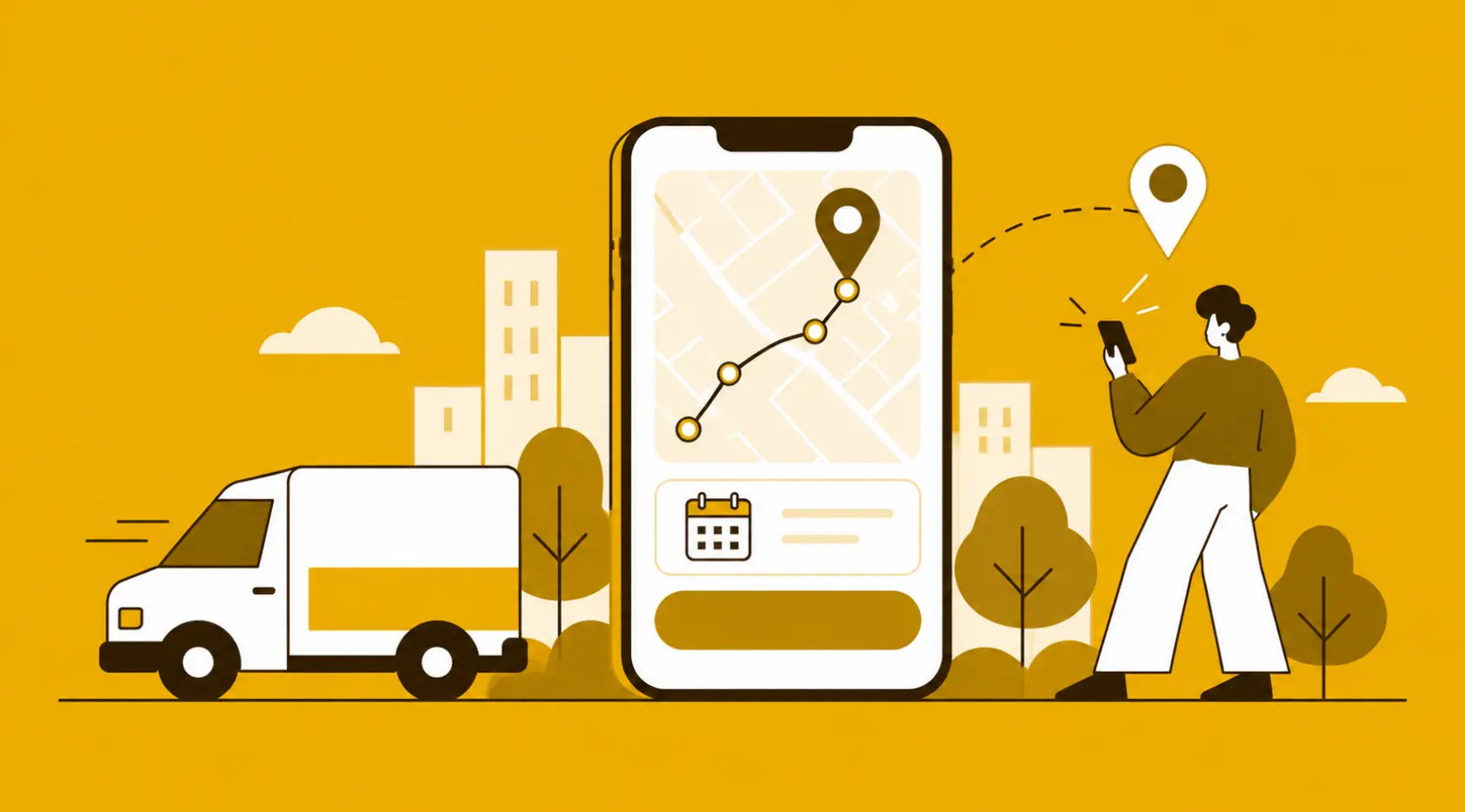
Real-time tracking gives customers visibility into the progress of a service request. In a taxi application, it can display a driver’s location and estimated arrival time. In a home-service platform, it can show when a professional has been assigned, is travelling, or has arrived.

Implementing this functionality involves several technical elements:

  • Location permissions: Request location access only when necessary and explain why it is needed.
  • GPS updates: Collect location updates from the provider’s device at appropriate intervals.
  • Mapping integration: Display locations and routes using a suitable mapping service.
  • Backend communication: Transmit location updates securely to the server.
  • Live synchronization: Deliver relevant updates to the customer’s application with minimal delay.
  • Estimated arrival times: Calculate estimates using route information and available traffic data where supported.

Technologies such as WebSockets or other real-time communication mechanisms can help deliver frequent updates without requiring users to refresh the screen.

However, tracking should be designed around the service workflow. Continuous location collection is rarely necessary when a provider is off duty or has no active assignment. Limiting tracking to appropriate periods improves privacy and reduces unnecessary background activity.

5. Choose the Right Technology Stack

Choose the Right Technology Stack

The technology stack determines how the application performs, communicates, and evolves as business requirements change.

For the mobile frontend, businesses can consider native Android and iOS development or cross-platform frameworks such as Flutter and React Native. The appropriate choice depends on device-specific requirements, team expertise, performance expectations, and the intended user experience.

The backend manages authentication, booking logic, provider assignments, notifications, and data processing. Technologies such as Node.js or Laravel may be suitable depending on the architecture and development team’s experience.

A typical technical foundation includes:

  • Mobile applications for customers and service providers
  • Backend services and secure APIs
  • A database for users, bookings, and provider availability
  • Mapping and geolocation APIs
  • Push notification infrastructure
  • Payment gateway integration where required
  • Monitoring, logging, and access controls

Businesses that need connected mobile and web experiences can also review BinaryMetrix’s full-stack mobile and web app development services.

Transform your service business with a scalable mobile application that connects customers and service providers seamlessly
Explore App Development

6. Build Notifications and Booking Status Updates

Real-time tracking is only useful when customers understand what is happening. Notifications provide context throughout the service journey.

Useful notification events include booking confirmation, provider assignment, appointment reminders, arrival updates, cancellation alerts, and service completion.

A clear status model might include Requested, Confirmed, Assigned, In Progress, Completed, and Cancelled. The application should update these states consistently across customer, provider, and admin interfaces.

Push notifications can handle important alerts, while in-app status updates provide additional detail. The system should also prevent duplicate notifications and avoid sending contradictory messages when booking states change rapidly.

For time-sensitive services, these communication details can significantly improve the perceived reliability of the platform.

7. Prioritise Security, Privacy, and Reliability

An on-demand application may process personal information, contact details, addresses, booking histories, and location data. Protecting this information is essential to maintaining customer trust.

Use secure authentication, role-based access controls, encrypted communication, and appropriate data-retention policies. Provider accounts should only access the information required to fulfil assigned requests, while administrators should have permissions appropriate to their responsibilities.

Location data deserves particular attention. Customers should understand when tracking is active, and providers should not be monitored unnecessarily outside relevant service activities.

Reliability is equally important. The platform should handle weak network connections, interrupted GPS signals, API failures, and temporary server disruptions without losing booking information. Retry mechanisms, error logging, and recovery workflows can help maintain service continuity.

8. Test the Application Before Launch

Test the Application Before Launch

Testing should cover individual features as well as interactions between the customer app, provider app, backend, and admin dashboard.

Important test scenarios include:

  • Booking and rescheduling appointments
  • Assigning providers based on availability
  • Updating locations and displaying tracking information
  • Handling poor GPS accuracy and network interruptions
  • Sending notifications at the correct stages
  • Processing cancellations and preventing duplicate bookings
  • Protecting user data and validating access permissions
  • Checking performance across supported devices

Real-world testing is particularly valuable for location-based applications. GPS accuracy, battery consumption, network conditions, and background execution can behave differently across devices.

After launch, monitor application crashes, booking completion rates, failed assignments, notification delivery, and customer feedback. These signals help identify problems that may not appear during controlled testing.

Have an idea for an on-demand platform? Let's discuss the features, technology, and strategy needed to bring it to life
Discuss Your Idea

9. Plan for Scalability and Continuous Improvement

An application that works for a small group of users may encounter new challenges as bookings and service providers increase. The architecture should allow the business to expand without rebuilding the entire platform.

Modular services, efficient database queries, caching where appropriate, and reliable background processing can support growth. Real-time tracking infrastructure should also be designed to handle concurrent location updates without overwhelming the backend.

Start with the essential workflows, validate them with actual users, and introduce advanced capabilities when they solve demonstrated problems. Features such as intelligent provider matching, automated support, and demand forecasting can be added as the platform matures.

A successful launch is the beginning of an ongoing improvement process. Regular maintenance, security updates, performance monitoring, and user feedback help keep the application dependable.

Conclusion

Building an on-demand service app with real-time tracking and booking requires a coordinated approach to product planning, interface design, backend engineering, location services, and security. The strongest platforms do more than accept service requests: they connect customers, providers, and administrators through reliable workflows and timely information.

By defining clear requirements, choosing appropriate technologies, testing real-world scenarios, and planning for future growth, businesses can create an application that supports both customer satisfaction and operational efficiency.

BinaryMetrix helps businesses explore digital product development through its mobile app development and full-stack development services. With the right development strategy, an on-demand platform can become a dependable foundation for delivering services more efficiently and building lasting customer relationships.


Take your business operations to the next level with a custom-built app featuring seamless booking and real-time updates
Contact Our Experts
FAQ
Frequently Asked Questions
What is an on-demand service app? −
An on-demand service app is a digital platform that connects customers with service providers for services such as home cleaning, taxi booking, repairs, healthcare appointments, and deliveries. It allows users to book services, track progress, receive notifications, and manage appointments through a mobile application.
What are the essential features of an on-demand service app? +
Essential features include user registration, service listings, appointment booking, provider management, real-time tracking, push notifications, payment integration, ratings and reviews, and an admin dashboard. The specific features depend on the business model and customer requirements.
How does real-time tracking work in an on-demand service app? +
How does real-time tracking work in an on-demand service app? Real-time tracking uses GPS, mapping services, and backend communication to share location updates between service providers and customers. The application displays the provider's current location, route information, and estimated arrival time when supported by the mapping service.
Which technologies are used to develop an on-demand service app? +
Common technologies include Flutter or React Native for cross-platform mobile development, Swift or Kotlin for native applications, Node.js or Laravel for backend development, and databases such as PostgreSQL or MySQL. Mapping APIs, push notifications, and real-time communication technologies support tracking and booking updates.
How can an on-demand service app manage bookings efficiently? +
An on-demand service app can manage bookings through automated provider assignment, availability checks, appointment scheduling, booking status updates, and cancellation management. Integrating these processes into a central system helps prevent scheduling conflicts and improves operational efficiency.
How can businesses ensure the security of an on-demand service app? +
Businesses can improve application security through encrypted communication, secure authentication, role-based access controls, API protection, and regular security testing. They should also protect personal and location data, request appropriate device permissions, and follow applicable privacy and data protection requirements.
How can an on-demand service app scale as a business grows? +
An on-demand service app can scale through modular architecture, optimized database queries, efficient API design, cloud infrastructure, and reliable real-time communication systems. Monitoring application performance and incorporating user feedback also helps businesses introduce new features while maintaining a consistent user experience.
Author at BinaryMetrix

Kailash Mishra Is a Co-Founder & Director at BinaryMetrix. He is a tech-savvy entrepreneur helping businesses grow through smart IT solutions. With expertise in mobile apps, digital marketing, and web development, he shares insights on digital trends, business strategies, and tech innovation.

Get In Touch
Let's Talk!

Got a question or collaboration in mind? Drop us a message — we're all ears!

+91 ▼
India +91
United States +1
United Kingdom +44
UAE +971
Saudi Arabia +966
Australia +61
Canada +1
Singapore +65
Malaysia +60
Pakistan +92
Bangladesh +880
Sri Lanka +94
Nepal +977
Afghanistan +93
Germany +49
France +33
Italy +39
Spain +34
Russia +7
Japan +81
China +86
South Korea +82
Brazil +55
Mexico +52
South Africa +27
Egypt +20
Nigeria +234
Kenya +254
Netherlands +31
Switzerland +41
Sweden +46
Norway +47
Denmark +45
Finland +358
Poland +48
Turkey +90
Iran +98
Iraq +964
Jordan +962
Lebanon +961
Qatar +974
Bahrain +973
Oman +968
Yemen +967
Philippines +63
Thailand +66
Vietnam +84
Indonesia +62
New Zealand +64
Belgium +32
Austria +43
Portugal +351
Greece +30
Hungary +36
Czech Republic +420
Slovakia +421
Romania +40
Bulgaria +359
Croatia +385
Slovenia +386
Serbia +381
Bosnia & Herzegovina +387
Montenegro +382
Kosovo +383
North Macedonia +389
Albania +355
Lithuania +370
Latvia +371
Estonia +372
Ireland +353
Iceland +354
Luxembourg +352
Malta +356
Cyprus +357
Moldova +373
Belarus +375
Ukraine +380
Armenia +374
Azerbaijan +994
Georgia +995
Andorra +376
Monaco +377
San Marino +378
Vatican City +379
Liechtenstein +423
US Virgin Islands +1
Puerto Rico +1
Dominican Republic +1
Trinidad & Tobago +1
Jamaica +1
Barbados +1
Argentina +54
Chile +56
Colombia +57
Venezuela +58
Peru +51
Ecuador +593
Bolivia +591
Paraguay +595
Uruguay +598
Cuba +53
Panama +507
Costa Rica +506
Honduras +504
El Salvador +503
Guatemala +502
Nicaragua +505
Belize +501
Haiti +509
Guyana +592
Suriname +597
Israel +972
Syria +963
Kuwait +965
Palestine +970
Bhutan +975
Mongolia +976
Tajikistan +992
Turkmenistan +993
Kyrgyzstan +996
Uzbekistan +998
Kazakhstan +7-KZ
North Korea +850
Laos +856
Cambodia +855
Myanmar +95
Maldives +960
Papua New Guinea +675
Fiji +679
Tonga +676
Samoa +685
Solomon Islands +677
Vanuatu +678
Kiribati +686
Marshall Islands +692
Palau +680
Micronesia +691
Tuvalu +688
Niue +683
Tokelau +690
Algeria +213
Morocco +212
Tunisia +216
Libya +218
Sudan +249
Ethiopia +251
Somalia +252
Tanzania +255
Uganda +256
Rwanda +250
Burundi +257
Mozambique +258
Zambia +260
Zimbabwe +263
Malawi +265
Botswana +267
Namibia +264
Eswatini +268
Lesotho +266
Madagascar +261
Mauritius +230
Seychelles +248
Comoros +269
Gambia +220
Senegal +221
Mauritania +222
Mali +223
Guinea +224
Ivory Coast +225
Burkina Faso +226
Niger +227
Togo +228
Benin +229
Liberia +231
Sierra Leone +232
Ghana +233
Chad +235
Central African Republic +236
Cameroon +237
Cape Verde +238
São Tomé & Príncipe +239
Equatorial Guinea +240
Gabon +241
Republic of Congo +242
DR Congo +243
Angola +244
Guinea-Bissau +245
British Indian Ocean Territory +246
Ascension Island +247
Djibouti +253
Saint Helena +290
7 - 1 = ?
Table of Contents
    Get In Touch

    Let's Discuss Your Project

    +91 ▼
    5 - 2 = ?
    ✅

    Thank You!

    Your enquiry has been sent successfully. Our team will contact you shortly.

    Get in Touch to Discuss Your Idea

    BinaryMetrix is committed to bring the ideas & businesses of our potential clients into existence via our rich expertise and experience of latest technologies & robust solutions.

    India India +91
    United States United States +1
    United Kingdom United Kingdom +44
    UAE UAE +971
    Saudi Arabia Saudi Arabia +966
    Australia Australia +61
    Canada Canada +1
    Singapore Singapore +65
    Malaysia Malaysia +60
    Pakistan Pakistan +92
    Bangladesh Bangladesh +880
    Sri Lanka Sri Lanka +94
    Nepal Nepal +977
    Afghanistan Afghanistan +93
    Germany Germany +49
    France France +33
    Italy Italy +39
    Spain Spain +34
    Russia Russia +7
    Japan Japan +81
    China China +86
    South Korea South Korea +82
    Brazil Brazil +55
    Mexico Mexico +52
    South Africa South Africa +27
    Egypt Egypt +20
    Nigeria Nigeria +234
    Kenya Kenya +254
    Netherlands Netherlands +31
    Switzerland Switzerland +41
    Sweden Sweden +46
    Norway Norway +47
    Denmark Denmark +45
    Finland Finland +358
    Poland Poland +48
    Turkey Turkey +90
    Iran Iran +98
    Iraq Iraq +964
    Jordan Jordan +962
    Lebanon Lebanon +961
    Qatar Qatar +974
    Bahrain Bahrain +973
    Oman Oman +968
    Yemen Yemen +967
    Philippines Philippines +63
    Thailand Thailand +66
    Vietnam Vietnam +84
    Indonesia Indonesia +62
    New Zealand New Zealand +64
    Belgium Belgium +32
    Austria Austria +43
    Portugal Portugal +351
    Greece Greece +30
    Hungary Hungary +36
    Czech Republic Czech Republic +420
    Slovakia Slovakia +421
    Romania Romania +40
    Bulgaria Bulgaria +359
    Croatia Croatia +385
    Slovenia Slovenia +386
    Serbia Serbia +381
    Bosnia & Herzegovina Bosnia & Herzegovina +387
    Montenegro Montenegro +382
    Kosovo Kosovo +383
    North Macedonia North Macedonia +389
    Albania Albania +355
    Lithuania Lithuania +370
    Latvia Latvia +371
    Estonia Estonia +372
    Ireland Ireland +353
    Iceland Iceland +354
    Luxembourg Luxembourg +352
    Malta Malta +356
    Cyprus Cyprus +357
    Moldova Moldova +373
    Belarus Belarus +375
    Ukraine Ukraine +380
    Armenia Armenia +374
    Azerbaijan Azerbaijan +994
    Georgia Georgia +995
    Andorra Andorra +376
    Monaco Monaco +377
    San Marino San Marino +378
    Vatican City Vatican City +379
    Liechtenstein Liechtenstein +423
    US Virgin Islands US Virgin Islands +1-US-VI
    Puerto Rico Puerto Rico +1-PR
    Dominican Republic Dominican Republic +1-DO
    Trinidad & Tobago Trinidad & Tobago +1-TT
    Jamaica Jamaica +1-JM
    Barbados Barbados +1-BB
    Argentina Argentina +54
    Chile Chile +56
    Colombia Colombia +57
    Venezuela Venezuela +58
    Peru Peru +51
    Ecuador Ecuador +593
    Bolivia Bolivia +591
    Paraguay Paraguay +595
    Uruguay Uruguay +598
    Cuba Cuba +53
    Panama Panama +507
    Costa Rica Costa Rica +506
    Honduras Honduras +504
    El Salvador El Salvador +503
    Guatemala Guatemala +502
    Nicaragua Nicaragua +505
    Belize Belize +501
    Haiti Haiti +509
    Guyana Guyana +592
    Suriname Suriname +597
    Israel Israel +972
    Syria Syria +963
    Kuwait Kuwait +965
    Palestine Palestine +970
    Bhutan Bhutan +975
    Mongolia Mongolia +976
    Tajikistan Tajikistan +992
    Turkmenistan Turkmenistan +993
    Kyrgyzstan Kyrgyzstan +996
    Uzbekistan Uzbekistan +998
    Kazakhstan Kazakhstan +7-KZ
    North Korea North Korea +850
    Laos Laos +856
    Cambodia Cambodia +855
    Myanmar Myanmar +95
    Maldives Maldives +960
    Papua New Guinea Papua New Guinea +675
    Fiji Fiji +679
    Tonga Tonga +676
    Samoa Samoa +685
    Solomon Islands Solomon Islands +677
    Vanuatu Vanuatu +678
    Kiribati Kiribati +686
    Marshall Islands Marshall Islands +692
    Palau Palau +680
    Micronesia Micronesia +691
    Tuvalu Tuvalu +688
    Niue Niue +683
    Tokelau Tokelau +690
    Algeria Algeria +213
    Morocco Morocco +212
    Tunisia Tunisia +216
    Libya Libya +218
    Sudan Sudan +249
    Ethiopia Ethiopia +251
    Somalia Somalia +252
    Tanzania Tanzania +255
    Uganda Uganda +256
    Rwanda Rwanda +250
    Burundi Burundi +257
    Mozambique Mozambique +258
    Zambia Zambia +260
    Zimbabwe Zimbabwe +263
    Malawi Malawi +265
    Botswana Botswana +267
    Namibia Namibia +264
    Eswatini Eswatini +268
    Lesotho Lesotho +266
    Madagascar Madagascar +261
    Mauritius Mauritius +230
    Seychelles Seychelles +248
    Comoros Comoros +269
    Gambia Gambia +220
    Senegal Senegal +221
    Mauritania Mauritania +222
    Mali Mali +223
    Guinea Guinea +224
    Ivory Coast Ivory Coast +225
    Burkina Faso Burkina Faso +226
    Niger Niger +227
    Togo Togo +228
    Benin Benin +229
    Liberia Liberia +231
    Sierra Leone Sierra Leone +232
    Ghana Ghana +233
    Chad Chad +235
    Central African Republic Central African Republic +236
    Cameroon Cameroon +237
    Cape Verde Cape Verde +238
    São Tomé & Príncipe São Tomé & Príncipe +239
    Equatorial Guinea Equatorial Guinea +240
    Gabon Gabon +241
    Republic of Congo Republic of Congo +242
    DR Congo DR Congo +243
    Angola Angola +244
    Guinea-Bissau Guinea-Bissau +245
    British Indian Ocean Territory British Indian Ocean Territory +246
    Djibouti Djibouti +253
    Saint Helena Saint Helena +290

    2 × 9 = ?
    ✅

    Thank You!

    Your quote request has been sent successfully. Our team will contact you shortly.

    ✅

    Thank You!

    Your quote request has been sent successfully. Our team will contact you shortly.

    call

    Call Us Now

    India India +91
    United States United States +1
    United Kingdom United Kingdom +44
    UAE UAE +971
    Saudi Arabia Saudi Arabia +966
    Australia Australia +61
    Canada Canada +1
    Singapore Singapore +65
    Malaysia Malaysia +60
    Pakistan Pakistan +92
    Bangladesh Bangladesh +880
    Sri Lanka Sri Lanka +94
    Nepal Nepal +977
    Afghanistan Afghanistan +93
    Germany Germany +49
    France France +33
    Italy Italy +39
    Spain Spain +34
    Russia Russia +7
    Japan Japan +81
    China China +86
    South Korea South Korea +82
    Brazil Brazil +55
    Mexico Mexico +52
    South Africa South Africa +27
    Egypt Egypt +20
    Nigeria Nigeria +234
    Kenya Kenya +254
    Netherlands Netherlands +31
    Switzerland Switzerland +41
    Sweden Sweden +46
    Norway Norway +47
    Denmark Denmark +45
    Finland Finland +358
    Poland Poland +48
    Turkey Turkey +90
    Iran Iran +98
    Iraq Iraq +964
    Jordan Jordan +962
    Lebanon Lebanon +961
    Qatar Qatar +974
    Bahrain Bahrain +973
    Oman Oman +968
    Yemen Yemen +967
    Philippines Philippines +63
    Thailand Thailand +66
    Vietnam Vietnam +84
    Indonesia Indonesia +62
    New Zealand New Zealand +64
    6 - 4 = ?
    ✅

    Request Received!

    Thank you for your request. Our team will call you back shortly.