

Introduction to Website Development
Website development is the craft of building digital environments that connect people with information, services, and each other. While it technically involves the frontend (user-facing interface) and backend (server-side logic, databases), modern development has shifted from building static pages to creating intelligent, adaptive systems.
Website development is the backbone of digital growth, combining frontend experience, backend performance, and scalable infrastructure to drive results.
Studies show 75% of users judge a company’s credibility based on its website design, highlighting its impact on trust and conversions.
A fast, secure, and well-structured website improves visibility, engagement, and ROI – making it a critical long-term investment for modern businesses.
Why Website Development Is Important for Businesses
- Builds Trust and Brand Image – When someone searches for your business online and finds an old or poorly designed website, they may not trust you. A professional and modern website makes your business look reliable and serious. This helps customers feel confident and choose you over others.
- Increases Visibility and Reach – If you depend only on word-of-mouth or paid ads, your growth can be limited. A search-optimized website helps people find you on Google. This means more potential customers can discover your business anytime, from anywhere.
- Available 24/7 – Your website works all the time – even when your office is closed. Customers can check your services, read information, and contact you whenever they want. It’s like having a salesperson working day and night.
- Gives You a Competitive Advantage -In a competitive market, a fast and modern website helps you stand out. If your competitors have outdated websites and you have a better one, customers are more likely to choose you.
- Helps You Understand Customers (Data & Insights) – With web site analytics, you can see what visitors are doing on your site – which pages they visit, what they like, and where they leave. This information helps you improve your marketing, increase conversions, and grow your business smarter.
Types of Website Development
1. Front-End Development (Client-Side Development)
Think of front-end development as the “wow” factor your visitors see first—the layouts, colors, buttons, and smooth animations that make them stick around. You’re building what users touch and feel, using HTML for the bones, CSS for the style, and JavaScript for the magic like pop-ups or sliders. The real win? It turns casual browsers into engaged customers by feeling intuitive and on-brand, slashing bounce rates and boosting conversions.
Key tech you need:
- HTML: The skeleton holding your content together.
- CSS: Makes it look sharp and adapts to any screen.
- JavaScript: Brings it to life with interactions.
Nail this, and your site doesn’t just look good—it feels like home to users.
2. Back-End Development (Server-Side Development)
Behind every seamless site is the back-end hustle—the invisible engine handling logins, payments, databases, and all the data crunching. While the front-end dazzles, the back-end makes sure everything runs like clockwork, storing user info securely or pulling product details in a flash. Languages like Python, PHP, Node.js, or Ruby power it, paired with databases (MySQL, MongoDB) and servers (Apache, Nginx).
Key tech that keeps things humming:
- Server-side languages (e.g., PHP , Ruby, Node.js): The brains of operations.
- Databases (e.g., MySQL, MongoDB): Where your customer gold lives.
- Server tools (e.g., Apache, Nginx): Traffic cops for smooth performance.
Without a solid back-end, your site crashes under pressure—losing sales and trust. It’s your reliability safety net.
3. Full-Stack Development
Ever wish one pro could handle the whole show? Full-stack devs are your Swiss Army knife: masters of both front-end flair and back-end power. They build, connect, and launch the full site solo, spotting issues across layers for flawless flow. Perfect for startups or tight budgets needing speed without juggling specialists.
Hot stacks to know:
- MEAN (MongoDB, Express.js, AngularJS, Node.js)
- MERN (MongoDB, Express.js, React, Node.js)—React’s a fave for dynamic UIs
- LAMP (Linux, Apache, MySQL, PHP)—classic and battle-tested
Hire one, and you get end-to-end magic: faster launches, fewer bugs, total control.
Web Development vs Web Design (Comparison)
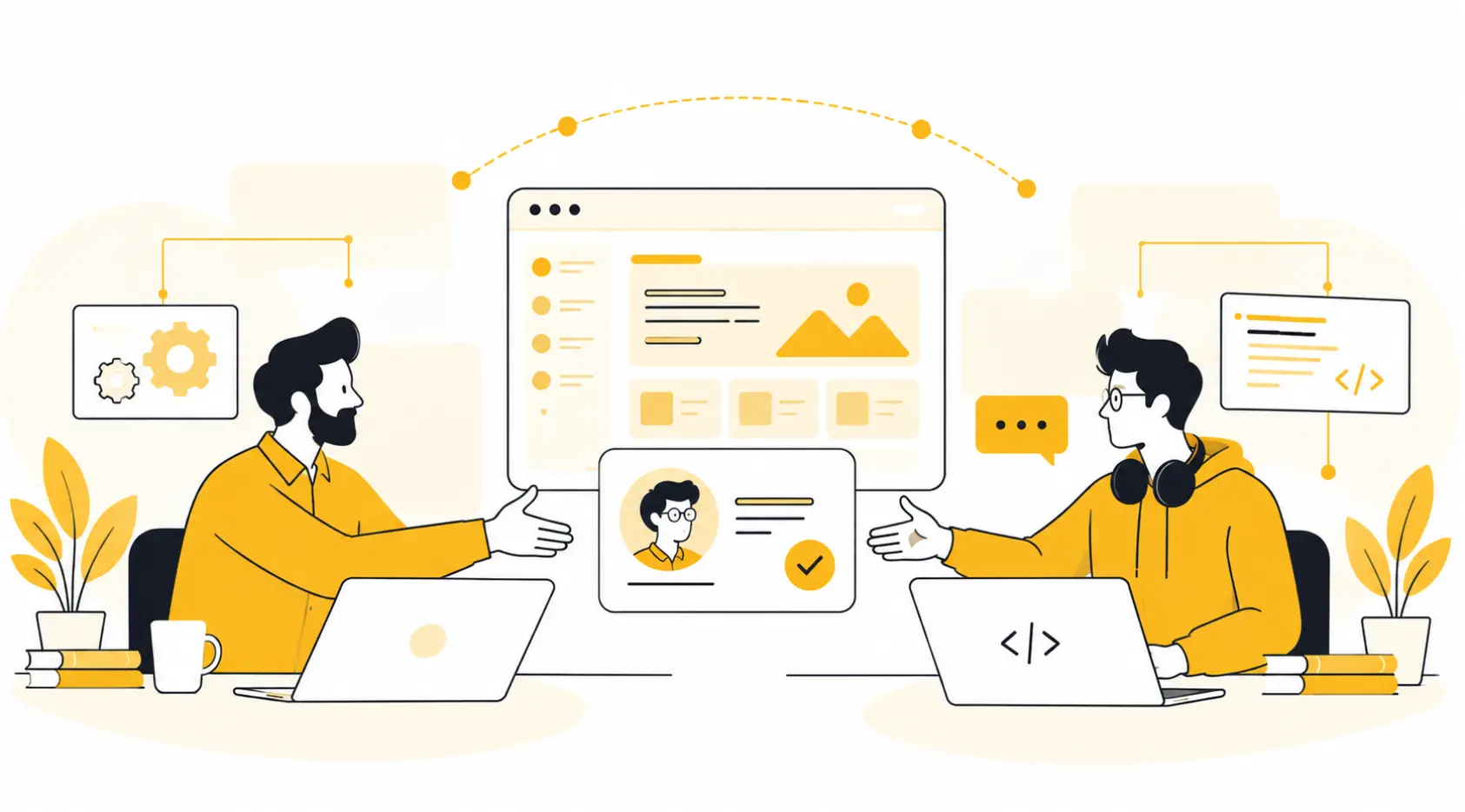
1. The Core Philosophy: Vision vs. Execution
The fundamental difference lies in how a professional approaches a blank screen.
- Web Design (The “Look”): Designers focus on the emotional response. They use UI/UX to ensure the site is aesthetically pleasing and intuitive. Their goal is to make the site “inviting”.
- Web Development (The “Function”): Developers are the engineers. They ensure the site doesn’t just look good but actually performs. Their goal is stability, speed, and flawless loading.
2. The Toolkit: Creativity vs. Logic
The tools of the trade define the daily workflow of these two specialists.
- Software: Designers use Photoshop, Figma, and Adobe XD to “draw” the site. Developers use VS Code, GitHub, and Databases to build the engine.
- Mastery: Design requires color theory and typography. Development requires fluency in languages like HTML, CSS, JavaScript, PHP, and Python.
3. The Final Deliverable: Blueprint vs. Building
The “Output” is where the handoff usually happens in a professional agency.
- The Designer’s Output: They produce Mockups and Prototypes. If you are looking to refresh your brand’s visual identity, our expert Website Designing services focus on creating these high-fidelity visual blueprints.
- The Developer’s Output: They produce Working Websites and CMS. To turn those visual blueprints into a high-performance reality, our Website-Development team breathes life into the code, ensuring a functional, secure application.
Key Components of Web Site Development
Building a successful website requires multiple technical and structural elements working together. Each component plays a crucial role in performance, user experience, and scalability.
1. Frontend (User Interface)
The frontend is the part of the website users see and interact with directly. It includes the layout, design, buttons, navigation menus, forms, images, and overall responsiveness.
A well-developed frontend ensures:
- Smooth navigation
- Fast loading pages
- Mobile responsiveness
- Interactive user experience
Modern businesses often choose advanced frontend technologies like React or Angular to create dynamic, high-performance web applications. If you’re looking for interactive and scalable UI solutions.
For businesses that prefer structured and enterprise-ready frontend frameworks, Angular is another powerful choice.
2. Backend (Server & Database)
The backend is the engine that powers the website. While users don’t see it, it handles all the logic, data processing, authentication, and server-side operations.
Backend development includes:
- Server configuration
- Database management
- API integrations
- Security implementation
- User authentication systems
For example:
- When a user fills out a contact form, the backend stores that data.
- When someone logs in, the backend verifies credentials.
- In eCommerce, the backend processes orders and payments.
A strong backend ensures your website is secure, scalable, and capable of handling high traffic without crashing.
3. Domain & Hosting
A website cannot function without a domain name and hosting server.
Domain Name:
This is your website’s address (e.g., yourbusiness.com). It represents your brand identity online.
Hosting:
Hosting is the server where all your website files, databases, and content are stored. Reliable hosting ensures:
- Faster load time
- Better uptime
- Improved security
- Higher SEO performance
Choosing the right hosting environment is especially important for high-traffic websites and web applications.
Web Development Languages & Technologies (Explained in Detail)
Web development relies on various programming languages, frameworks, and technologies. Each serves a specific purpose in building a complete and functional website.
1. Frontend Technologies
Frontend technologies control everything users see in their browser.
HTML (HyperText Markup Language)
Defines the structure of web pages.
CSS (Cascading Style Sheets)
Controls styling such as colors, fonts, spacing, and layout.
JavaScript
Adds interactivity like sliders, pop-ups, dynamic forms, and real-time updates.
Modern JavaScript frameworks like React and Angular take frontend development to the next level by enabling fast, interactive, and scalable web applications. Businesses aiming for high-performance digital platforms often opt for frameworks like React or Angular based on their project requirements.
2. Backend Technologies
Backend technologies manage server-side operations and database interactions.
PHP
Widely used for dynamic websites and content management systems.
Python
Known for simplicity and scalability in web applications.
Node.js
Allows JavaScript to run on the server side, ideal for real-time applications.
Java
Commonly used for enterprise-level and large-scale applications.
The choice of backend technology depends on project complexity, scalability requirements, and long-term business goals.
3. Databases
Databases store, organize, and retrieve website data.
MySQL
A structured database commonly used with PHP-based websites.
MongoDB
A NoSQL database suitable for handling large volumes of unstructured data.
Selecting the right database ensures data security, faster queries, and seamless scalability.
4. Frameworks & Libraries
Frameworks help developers build websites faster and more efficiently by providing ready-made components and structured architecture.
React
A JavaScript library used for building interactive user interfaces and single-page applications.
Angular
A full-fledged frontend framework ideal for enterprise-level applications.
Laravel
A PHP framework used for structured backend development.
5. WordPress (Content Management System)
For businesses that need a flexible, SEO-friendly, and easy-to-manage website, WordPress is one of the most popular choices globally.
It is ideal for:
- Corporate websites
- Blogs
- Service-based businesses
- eCommerce stores
If you’re considering a scalable and SEO-optimized CMS solution, you can explore our WordPress website development services
WordPress combines ease of management with strong customization capabilities, making it suitable for startups as well as established brands.
The Website Development Process
Understanding the website development process helps beginners see the bigger picture. Below is a structured and practical breakdown of how a professional website is built.
1. Planning
This is the foundation stage.
During planning, the team defines:
- Business goals
- Target audience
- Website purpose
- Required features
- Competitor analysis
- Sitemap structure
Clear planning prevents confusion and reduces costly revisions later.
2. Designing
Once planning is complete, the design phase begins.
Designers create:
- Wireframes (basic layout structure)
- UI mockups
- Prototypes
- Mobile-responsive designs
The goal is to ensure a visually appealing and user-friendly experience before development starts.
3. Development
In this phase, developers turn the design into a working website.
This includes:
- Frontend coding
- Backend development
- Database integration
- CMS setup (if required)
- API integration
This is the most technical stage, where the website’s functionality is built.
4. Testing
Before launch, the website must be tested thoroughly.
Testing includes:
- Checking broken links
- Cross-browser compatibility testing
- Mobile responsiveness testing
- Speed optimization
- Security testing
- Bug fixing
Proper testing ensures smooth user experience and prevents future technical issues.
5. Launch
After successful testing, the website goes live.
This involves:
- Deploying files to the live server
- Connecting the domain
- Configuring hosting
- Final performance checks
Launch is not the end — it’s the beginning of the growth phase.
6. Maintenance
A website requires regular updates and monitoring.
Maintenance includes:
- Security updates
- Plugin updates
- Performance optimization
- Backup management
- Content updates
- Fixing technical issues
Ongoing maintenance ensures your website remains secure, fast, and competitive.
Recent Trends in Web Development
- AI-Powered Development: AI is significantly boosting productivity by writing code, building frameworks, and creating content, with expectations that a vast majority of code will be AI-assisted.
- Serverless Architecture: More developers are adopting serverless models, which remove the need to manage infrastructure, lowering costs and improving scalability.
- React Server Components & Next.js: A shift towards rendering UI on the server reduces JavaScript bundle sizes, leading to faster page loads and improved performance.
- API-First & Headless CMS: Separation of frontend and backend allows for more dynamic, personalized content delivery and flexible integrations.
- Edge Computing: Processing data closer to the user reduces latency for faster, real-time experiences.
- While staying updated on these trends is vital, ensuring your project follows a structured path is equally important. For a full breakdown, refer to website development checklist designed for business owners
Conclusion
Website-development is no longer just about creating an online presence – it’s about building a powerful digital asset that drives growth, builds trust, and generates measurable results. From frontend design and backend architecture to databases, hosting, and ongoing maintenance, every component plays a critical role in delivering performance, security, and scalability.
As discussed throughout this guide, a successful website requires strategic planning, thoughtful design, clean development, thorough testing, and continuous optimization. Whether you choose a custom-coded solution, modern frameworks like React or Angular, or a flexible CMS like WordPress, the ultimate goal remains the same: creating a high-performing platform that aligns with your business objectives.
In today’s competitive digital landscape, businesses that invest in professional website development gain a clear advantage – better visibility, higher conversions, improved user experience, and long-term scalability.
If you’re ready to build or upgrade your website with a strategic, performance-driven approach, our experts are here to help. Get in touch with us!






 +91-7982030802
  +1(315) 585-1155