
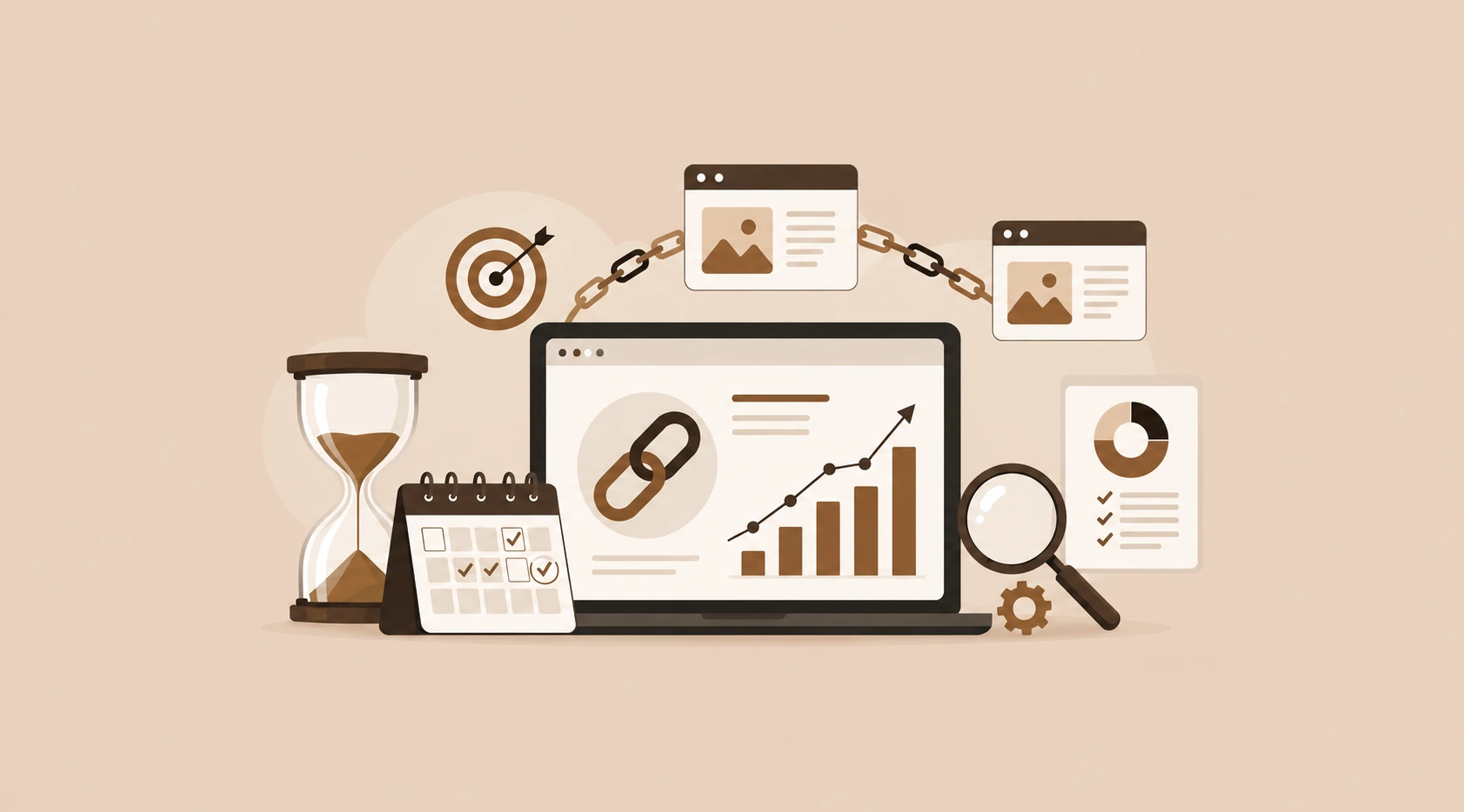
I get this question from almost every client in month one: how long does link building take? Honestly, there’s no clean one-line answer I can hand someone. Clients want a date circled on a calendar. Search engines just don’t work that way. What I can give you is the real link building results timeline, the one built from watching hundreds of campaigns actually play out, so you know what to expect and when something’s genuinely off track.
This guide walks through what happens after you start building backlinks, month by month, in plain terms.
Whether you’re running link building in-house or you’ve handed it to an agency, having a realistic link building results timeline in front of you changes everything. It changes how you budget. It changes how you report to your boss. It changes whether you panic in month two or just keep going.
Why There Is No Single Answer to How Long Does Link Building Take
Here’s the thing most people miss: Google doesn’t process a backlink the second it goes live. It has to find the page, crawl it, weigh the context around the link, then decide how much trust to pass through. That alone can take days, sometimes weeks, per link, and it compounds across dozens of links.
Your link building results timeline also depends on a handful of variables specific to your site, not some industry-wide average:
- how old and how authoritative your domain already is
- how competitive your target keywords are
- the quality and relevance of the sites linking back to you
- whether your on-page and technical SEO were solid to begin with
- how consistently you’re publishing content worth linking to
- how link-heavy your niche already is
A brand-new site chasing competitive commercial keywords will always see a slower backlink results timeline than an established site picking up links in a quieter niche. Neither is doing anything wrong. It’s just a different math problem.
The Realistic Link Building SEO Timeline, Month by Month
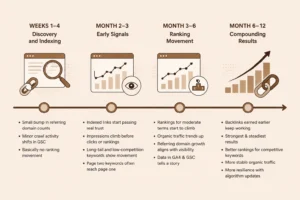
Here’s what a typical link building results timeline actually looks like, assuming the campaign is run properly, with real outreach and placements that make sense rather than shortcuts.
Weeks 1 to 4: Discovery and Indexing
Most of what happens in month one is invisible, and I mean that literally. Google has to find and index the pages hosting your new backlinks before those links carry any weight at all. During this stretch you might notice:
- a small bump in referring domain counts in Semrush or Ahrefs
- minor crawl activity shifts in Google Search Console
- basically no ranking movement
That’s normal. More campaigns get killed off in week one out of impatience than for any real strategic reason.
Month 2 to 3: Early Signals
By month two or three, indexed links start passing real trust. This is usually where the early SEO results from link building show up, especially on long-tail and lower-competition terms. Impressions in Search Console tend to climb before clicks or rankings do, because Google’s out there testing your pages against more queries than before.
If a keyword’s already hovering on page two, this is often when it finally tips onto page one.
Month 3 to 6: Ranking Movement
This is the stretch where clients usually start pointing at real backlink ranking improvements and saying “that’s working.” Rankings for moderately competitive terms begin to climb, organic traffic trends up, and referring domain growth starts lining up with the visibility gains. If you’re tracking things properly in GA4 and Search Console, month three through six is where the data finally tells a story you can act on.
Month 6 to 12: Compounding Results
Link building compounds. A backlink earned in month one is still doing work in month nine, and every new link stacks on top of it. Somewhere between six months and a year, most well-run campaigns hit their strongest and steadiest results: better rankings for competitive commercial keywords, more stable organic traffic, and more resilience when Google rolls out an algorithm update.
That compounding effect is exactly why the link building results timeline rewards consistency over quick bursts of activity. Slow and steady genuinely wins this one.
Get a custom link building results timeline based on your site's authority and competition.
Get My Free TimelineHow Long Do Backlinks Take to Affect SEO Rankings
If what you’re really asking is how long do backlinks take to work, the honest range is four to twelve weeks for Google to fully process a single high-quality link, and another three to six months before that link actually contributes to a visible ranking shift on a moderately competitive keyword. Highly competitive industries can push that out to nine or twelve months, particularly if competitors are running their own link building at the same time.
A few things influence how long before backlinks increase organic traffic on your specific site:
- Link placement context. A link woven naturally into relevant, well-written content works faster than one dropped into a generic resource list.
- Referring domain authority. Links from established, trusted sites get indexed and weighted faster than links from newer or lower-authority domains.
- Anchor text relevance. Natural, varied anchor text builds trust steadily instead of triggering unwanted scrutiny.
- Your existing site health. A technically clean site with solid Core Web Vitals performance absorbs new authority faster than one riddled with crawl errors or thin content.
How the Link Building Results Timeline Changes by Business Type
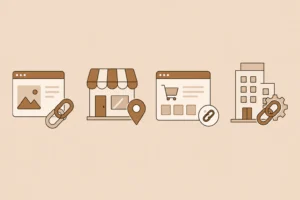
Not every business starts from the same place, and that changes how fast a campaign shows results.
- New websites (under one year old). Expect the slow end of the link building results timeline here. Google’s still building trust in the domain overall, so even strong backlinks take longer to turn into ranking movement, often nine months or more for anything competitive.
- Established local businesses. Local and low-competition keywords usually respond faster, sometimes within eight to twelve weeks, because there’s less authority to fight through.
- Ecommerce stores. Product and category pages often need link building paired with stronger internal linking to actually move traffic, since individual product pages just don’t carry the same authority as a core service page.
- B2B and SaaS companies. Competitive, high-intent terms in this space tend to sit at the longer end, often six to nine months, mostly because everyone else in the space is running aggressive link building too.
Knowing which bucket your business falls into helps you set expectations that match reality, not a generic average.
How Long Does It Take for Google to Recognize Backlinks
Google usually discovers and crawls a new backlink within a few days to a few weeks, depending on how often the linking page itself gets crawled. High-authority news sites and active blogs get crawled constantly, so links there get picked up fast. Smaller or rarely-updated sites take longer.
But recognition isn’t the same as ranking impact. Google can see a link within days and still take months to fold that trust signal into your rankings. That gap trips up a lot of people new to SEO, and it’s honestly the most confusing part of the link building results timeline to explain to a client.
Signs Your Link Building Campaign Is Working Before Rankings Move
Rankings lag behind everything else, so watch for these earlier signals instead:
- referring domains climbing steadily, month over month
- impressions rising in Search Console, even without matching clicks yet
- branded search volume ticking up as more sites mention your business
- crawl frequency improving on your key pages
- featured snippet or “People also ask” appearances for target queries
If you’re seeing these but rankings haven’t budged yet, your campaign is likely right on schedule.
We'll review your data and tell you honestly where you stand.
Request a Free SEO AuditHow to Track SEO Results From Link Building
A few tools, tracked consistently, keep expectations grounded and show real progress well before rankings shift dramatically:
- Google Search Console. Watch impressions, average position, and click-through rate for target queries, plus the Links report for new referring domains.
- GA4. Track organic traffic trends by landing page so you can connect specific link building efforts to specific results.
- Semrush or Ahrefs. Keep an eye on referring domain growth, toxic link ratio, and keyword position changes over rolling 90-day windows, not week to week.
- Rank tracking tools. Check in monthly, not daily. Daily fluctuations rarely say anything real about link building progress.
Put these together and you get a far clearer picture of your backlink results timeline than rankings alone will ever give you.
Realistic Expectations: When to Actually Be Concerned
A slow start is normal. These signs, though, suggest something needs a second look:
- zero referring domain growth after three full months of active outreach
- no movement in Search Console impressions after four to six months
- links landing, but from clearly irrelevant or low-quality sites
- no change in branded search volume despite months of placements
If you’re seeing any of these, it’s worth auditing the strategy behind your link building SEO timeline rather than just waiting it out.
How BinaryMetrix Approaches Link Building for Faster, Sustainable Results
At BinaryMetrix, our SEO link building process is built around relevance and quality over sheer volume, which is exactly what shortens a realistic link building results timeline without putting your site at risk. We pair outreach-based backlinks with a broader search engine optimization strategy so link building supports your on-page and technical work instead of operating in its own silo.
If you’d rather have a structured, ongoing plan, our backlink packages are built around consistent monthly link acquisition, because steady output is really what drives compounding results over time.
Want the deeper foundation first? Our complete guide to link building walks through the whole strategy end to end, and our piece on why businesses need a professional link building agency covers what separates results-driven campaigns from the ones that quietly stall out.
Final Thoughts
There’s no single number that answers how long does link building take, but there is a pattern nearly every campaign follows: quiet indexing in month one, early signals by month two or three, real ranking movement by month six, and compounding growth from there. Understanding this link building results timeline is really what separates businesses that stick around long enough to see results from the ones that quit right before it all clicks.
Want a clear, month-by-month plan built around your site’s actual authority and competition? Get in touch with our team for a free consultation.
Get a link building plan matched to your budget and goals.
Talk to Our SEO Team





 +91-7982030802
  +1(315) 585-1155