
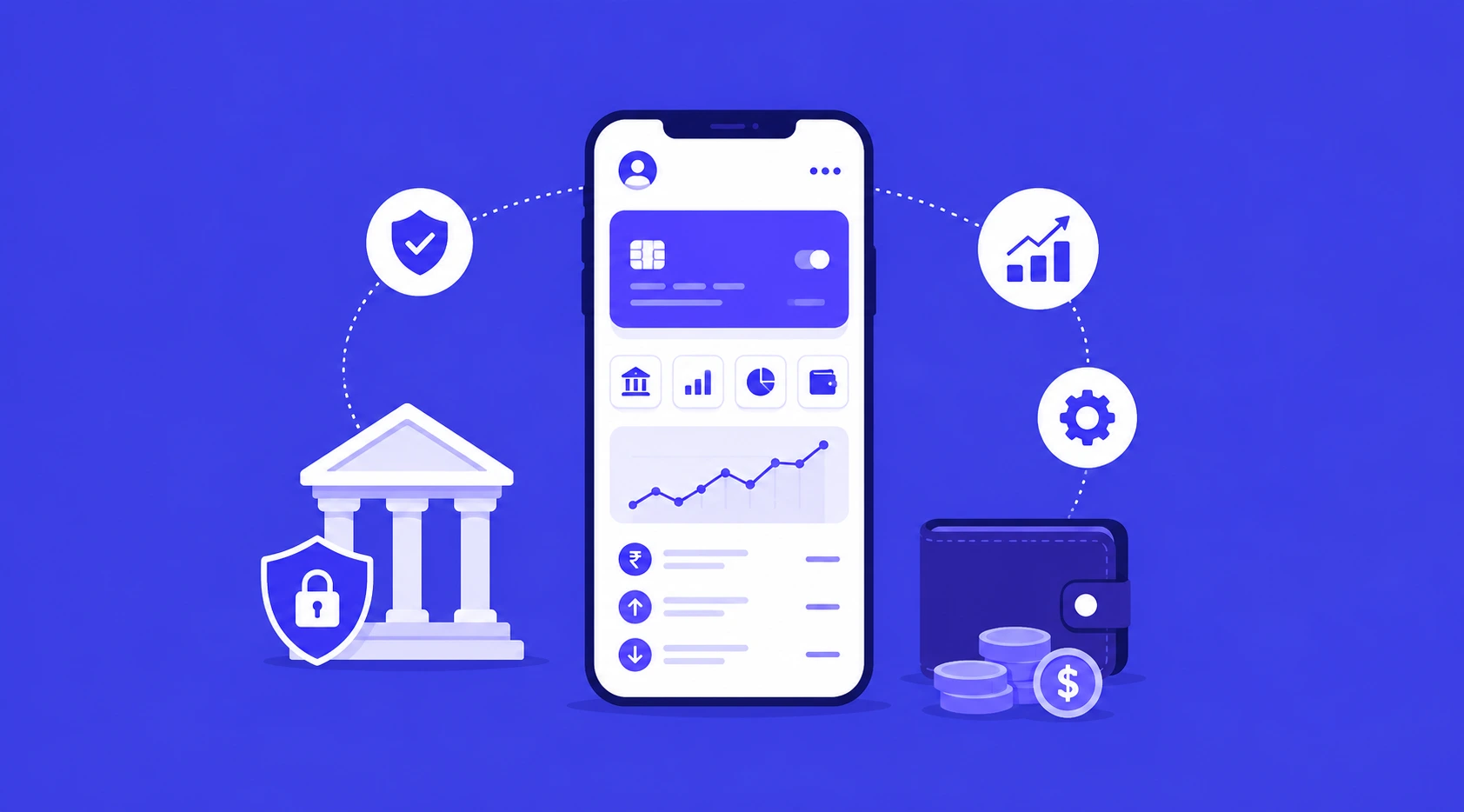
Money moved from wallets to apps years ago, and it isn’t moving back. From splitting a dinner bill to trading crypto on a lunch break, people expect financial tasks to happen inside a clean, fast, secure app. That expectation is exactly why so many banks, credit unions, startups, and lenders are searching for the right fintech app development company to bring their idea to life.
If you’re planning to build a finance product in 2026, you probably have three questions on repeat: what will it cost, what features actually matter, and what does the build process look like from kickoff to launch. This guide walks through all three, along with the compliance and security details that separate a serious financial product from a shiny prototype.
Why Fintech Apps Are Different from Regular Apps
A food delivery app and a banking app might look similar on the surface. Both need clean screens, fast load times, and a smooth checkout flow. But underneath, fintech products carry a weight that most consumer apps don’t.
Every screen touches real money, personal financial data, or both. That changes how a fintech mobile app development company approaches architecture from day one. Encryption isn’t optional. Audit trails aren’t a “nice to have” for phase two. Regulatory reporting has to be baked into the data model, not bolted on later.
This is also why cost estimates for fintech projects tend to run higher than a typical business app of similar size. You’re not just paying for screens and features. You’re paying for a team that understands fintech software development services well enough to avoid the expensive mistakes that come from treating a banking app like a to-do list app.
How Much Does Fintech App Development Cost?
Pricing for a finance app depends heavily on scope, but here’s a realistic breakdown most custom fintech app development projects fall into:
- Simple MVP (basic wallet, budgeting, or savings tracker): $8,000 to $15,000
- Mid-complexity app (peer-to-peer payments, personal finance dashboards, bill splitting): $15,000 to $40,000
- Full-scale platform (neobank, lending, investment, or crypto app): $40,000 to $90,000+
This is one of the most common questions clients ask when they first reach out to a fintech app development company, and the honest answer is always “it depends on scope.” A few factors push these numbers up or down:
- Regulatory scope. An app handling payments in multiple US states or across countries needs more legal and compliance work than a single-market product.
- Third-party integrations. Connecting to banking rails, KYC providers, credit bureaus, or payment processors adds development time.
- Platform choice. Native iOS and Android builds cost more than a single cross-platform codebase, though native often performs better for security-sensitive screens.
- Design complexity. Dashboards with charts, transaction histories, and real-time balances take longer to design and build than a simple form-based app.
If you’ve researched banking app development cost figures elsewhere and found wildly different numbers, that’s normal. Vendors quote based on very different assumptions about scope, so it pays to get a detailed, itemized estimate rather than a single round number.
For comparison, other on-demand app categories such as food delivery platforms follow a similar cost logic: complexity and integrations drive price far more than the number of screens.
Share your project scope and get a detailed cost breakdown within days
Request a Free QuoteCore Features Every Fintech App Needs
Whether you’re building a digital wallet app development project or a full investment platform, certain features show up again and again because users have come to expect them.
Account and Identity Features
- Secure sign-up with multi-factor authentication
- KYC (Know Your Customer) verification
- Biometric login (Face ID, fingerprint)
- Account recovery flows that don’t compromise security
Money Movement Features
- Instant transfers between accounts
- Bill pay and recurring payments
- Currency conversion for international transfers
- Transaction history with filtering and search
Trust and Transparency Features
- Real-time push notifications for every transaction
- Spending categorization and budgeting tools
- In-app support or chat for disputes
- Clear fee breakdowns before any transaction confirms
Advanced Features (Depending on App Type)
- P2P lending or micro-loan modules
- Investment portfolios with real-time market data
- Crypto wallet app development features like multi-currency wallets and secure key storage
- AI-driven spend insights and savings recommendations
A strong fintech app development company won’t just build these features in isolation. They’ll design the data flow so that every feature respects the same security and compliance standards, which matters more in finance than in almost any other app category.
The Fintech App Development Process, Step by Step
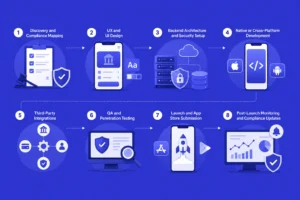
Here’s what a structured fintech app development process typically looks like from the first conversation to a live app in the App Store and Google Play.
1. Discovery and Compliance Mapping
Before any design work starts, the team maps out which regulations apply (PCI DSS for card data, GDPR or state privacy laws for user data, and possibly banking regulations depending on your model). This step shapes everything downstream, so skipping it usually leads to expensive rework later. It’s also why picking a fintech app development company with real regulatory experience matters more here than in almost any other phase.
2. UX and UI Design
Financial apps live or die on trust, and trust is partly visual. Clean typography, obvious button hierarchy, and screens that never leave users guessing what a transaction will cost all matter here.
3. Backend Architecture and Security Setup
This is where encryption standards, secure API gateways, and database structures get built. For most fintech app developers, this phase takes longer than in other industries because every data point needs a security review.
4. Native or Cross-Platform Development
Depending on your audience, the team builds using native app development for maximum performance on a single platform, or a shared codebase through cross-platform development to launch on iOS and Android at once. Popular frameworks for this include Flutter and React Native, while platform-specific builds often rely on dedicated iOS and Android development tracks.
5. Third-Party Integrations
Payment gateways, KYC verification services, and banking APIs get wired in and tested extensively, since a failed integration here can block real money movement.
6. QA and Penetration Testing
Financial apps need more than functional testing. Security testing, load testing, and penetration testing all happen before launch to catch vulnerabilities early.
7. Launch and App Store Submission
Financial apps face extra scrutiny during app store review, so submission packages need clear documentation of how user data and money are handled.
8. Post-Launch Monitoring and Compliance Updates
Regulations change, and so do fraud patterns. A serious fintech app development company builds in ongoing monitoring rather than treating launch as the finish line.
Connect with our experts to discuss features, timelines, and development costs
Request a QuoteNeobanks, Personal Finance Apps, and Beyond
Not every fintech project looks the same, and the development approach shifts depending on the model.
Neobank app development projects tend to need the deepest banking integrations, since they’re often replacing a traditional bank account entirely. Expect more work around account provisioning, card issuance partnerships, and regulatory licensing support, which is exactly why choosing a fintech app development company with prior banking experience matters most for this model.
Personal finance app development projects, by contrast, often connect to existing bank accounts through aggregation APIs rather than holding funds directly. This lowers regulatory overhead but raises the bar on data visualization and user engagement, since the whole value proposition is helping people understand their spending.
Crypto-focused apps sit somewhere in between. Crypto wallet app development demands serious attention to private key security and often benefits from third-party audits before launch, since a single vulnerability here can be catastrophic.
If you’re weighing which model fits your business, our team can walk through the tradeoffs during a free project consultation.
Security: The Non-Negotiable Layer
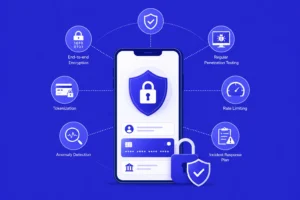
Security deserves its own section because it’s the one area where cutting corners costs the most. A breach doesn’t just cost money to fix. It costs user trust, which is nearly impossible to win back in financial services.
At minimum, a fintech app should include:
- End-to-end encryption for data in transit and at rest
- Regular penetration testing, not just a one-time audit
- Tokenization for stored payment data instead of raw card numbers
- Rate limiting and anomaly detection to catch fraud attempts early
- A clear incident response plan before launch, not after a breach
These principles echo what we’ve covered in general terms around website security essentials, though fintech apps typically need a stricter version of every safeguard given the sensitivity of financial data.
Why Businesses in the USA Choose BinaryMetrix
Clients searching for a fintech app development USA partner usually want three things: technical depth, clear communication, and a team that treats compliance as part of the build rather than an afterthought.
As a fintech app development company working with clients across the US, Canada, and Europe, we know that trust is built long before launch day. Our mobile app development team has shipped apps across on-demand, healthcare, and finance categories, which means we bring cross-industry lessons into every fintech build rather than starting from a blank slate. We also offer flexible engagement models, so if you already have an in-house product team and just need extra engineering hands, you can explore our options to hire dedicated developers rather than commit to a full project handoff.
Want to see how we’ve approached past projects? Our portfolio includes case studies across multiple industries that show how we balance speed with the level of care financial products demand.
Looking ahead, we’re also planning deeper resources on How to Choose the Right Fintech Development Partner, AI-Powered Fraud Detection in Banking Apps, and Blockchain in Fintech App Development, so keep an eye on our blog if these topics matter to your roadmap.
Get expert guidance on scope, cost, and compliance before you commit to a build
Book a Free ConsultationFinal Thoughts
Building a finance app in 2026 isn’t just about shipping features fast. It’s about earning trust with every screen, every transaction, and every notification. Working with an experienced fintech app development company means you get a partner who treats security, compliance, and user experience as equally important, not as competing priorities.
Whether you’re exploring a neobank, a personal finance tool, or a crypto wallet, the right development partner will save you both money and headaches down the road by getting the architecture right the first time.









 +91-7982030802
  +1(315) 585-1155